 |
Ingersoll Cunningham and Delia Broderick, 53 Seaver St., 1935
Delia Broderick (1895-1971) emigrated from Ireland in 1915. By 1927, she was a live-in servant for the John Henry Cunningham family on 53 Seaver St. She is shown here with the Cunningham’s youngest child, Ingersoll (1923-2020). Never married, she lived at the house for the rest of her life remaining, in her later years, a close friend to the widowed Theresa Cunningham, wife of John.
[Source: Smithsonian]
|
 |
Coolidge Corner
Looking north from Beacon St. at the house at 218 Harvard St.
[Source: Olmsted]
|
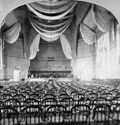 |
Town Hall, June 1874
The third town hall was opened in February 1873. It is reasonably likely that the hall is set up here for the 1874 high school graduation ceremonies. The sign on the rear wall spells out “B. H. S. 1874” and appears to match the newspaper description of the 1877 graduation in town hall with a similar hanging made from flowers.
Stereoview by Thomas Lewis, Cambridgeport
|
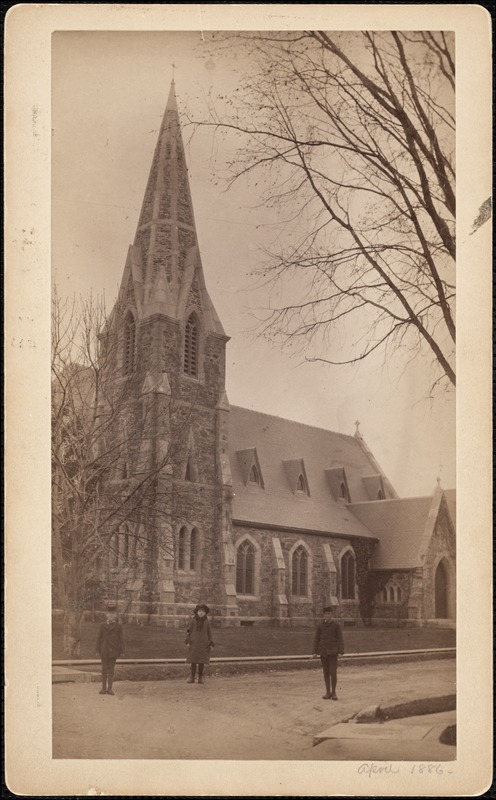 |
Episcopal Church of Our Saviour, Carlton & Monmouth, April 1886
Viewed from Carlton St., Monmouth St. is to the right. The identities of the children are not known. Parenthetically, it is noted that the rector of the church, Reginald Howe, moved his family into the church housing annex around the time of this photo. His daughter was 17 and his son was 11 at the time.
[Source: Digital Commonwealth]
|
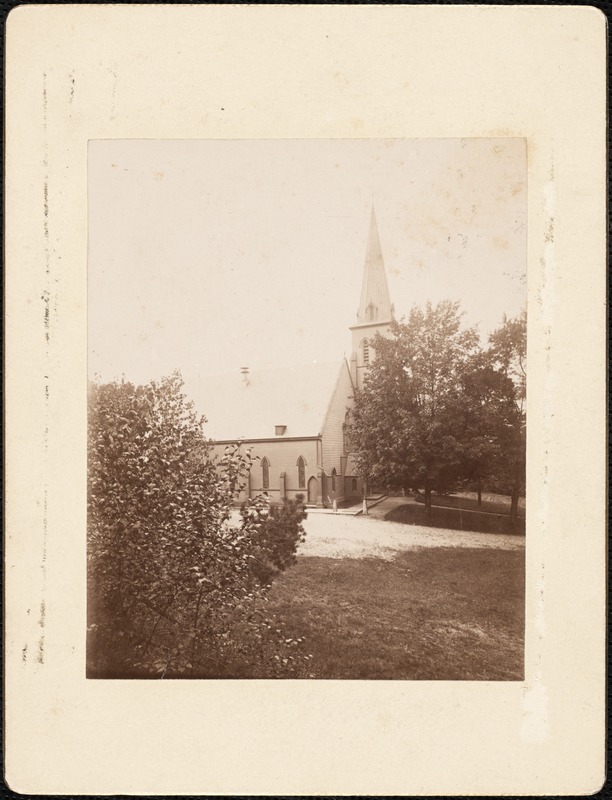 |
First Parish Church, Third Building, 1891
This is the third iteration of the First Parish Unitarian Church shortly before its replacement by the current First Parish Unitarian Church.. It had previously replaced the second building, on the same site, in 1848.
[Source: Digital Commonwealth]
|
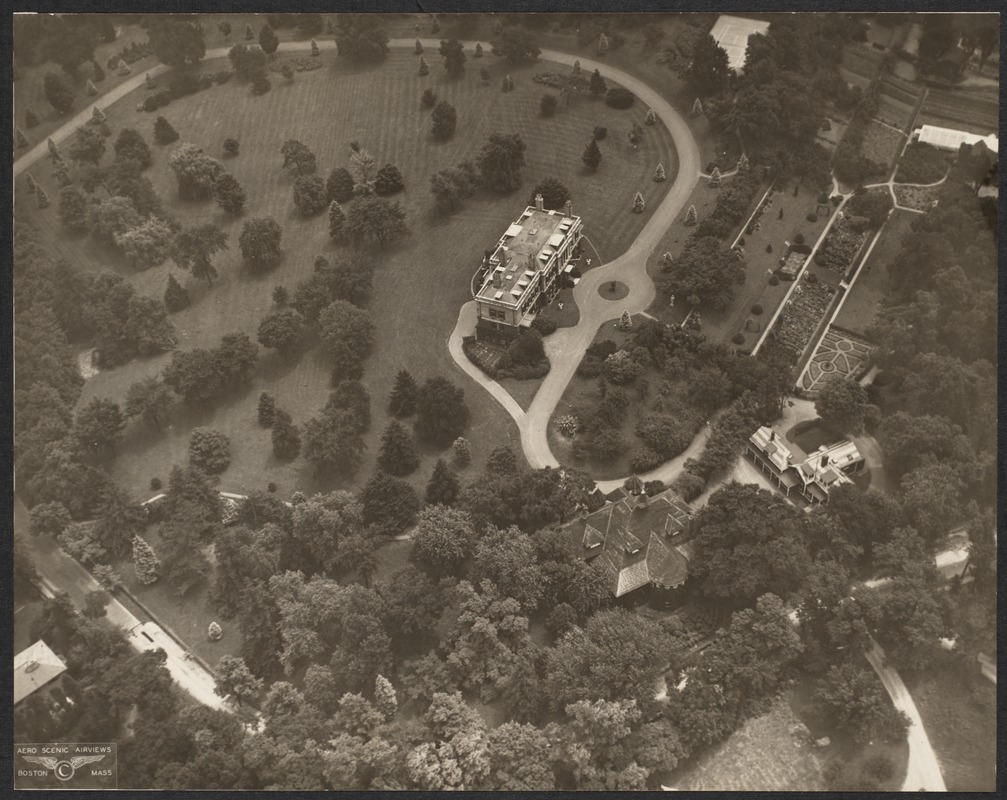 |
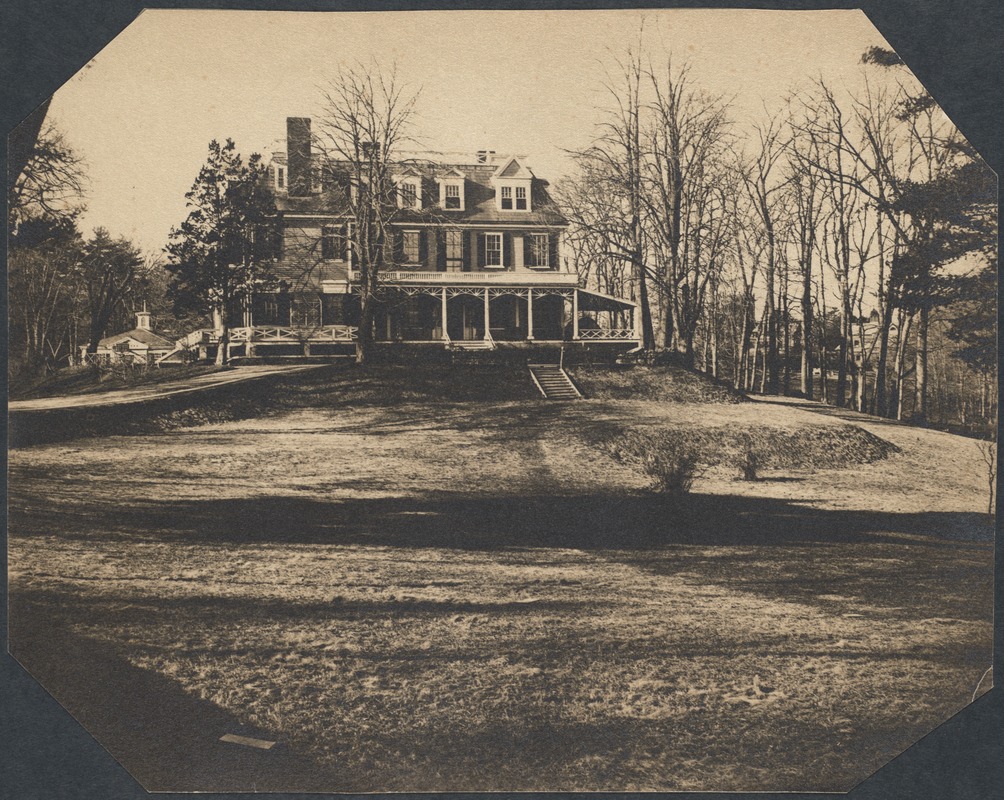
Weld House, 50 Goddard Ave.
In the center is the house of Mrs. Hannah (Train) Weld, widow of Dr. Charles Goddard Weld. Goddard Ave. runs along the bottom of the photo with 15 Goddard Ave., still standing, visible in the lower left corner. The Weld house was purchased in 1946 and is still in use by the Hellenic College and Holy Cross Greek Orthodox School of Theology. The other Weld buildings are no longer standing.
[Source: Digital Commonwealth]
|
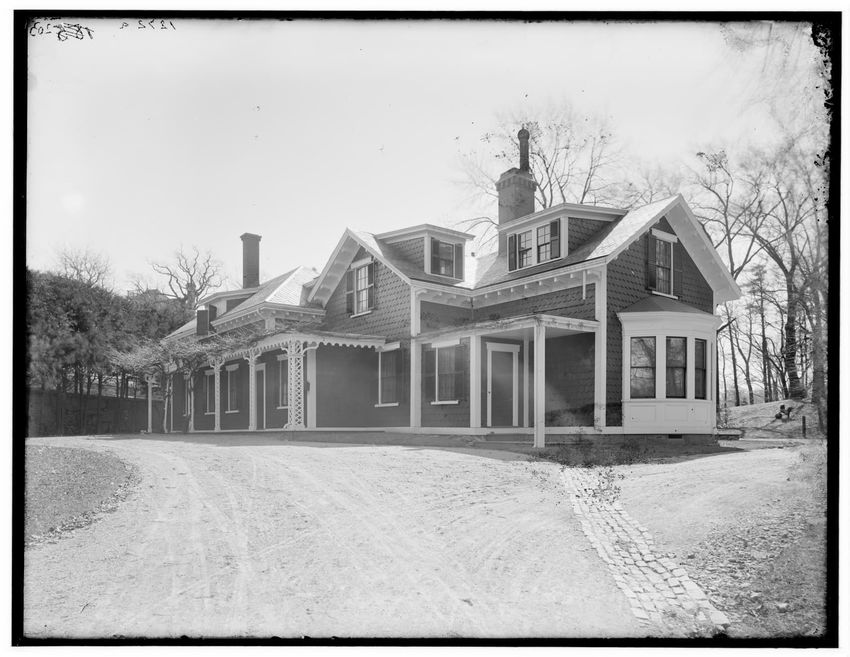 |
Secondary Dwelling, Weld Estate, 50 Goddard Ave.
Viewed from Goddard Ave. The function of this smaller dwelling on the estate of Charles Goddard Weld is not known, it is no longer standing. The stone wall and the driveway it supports are still in use by the Hellenic College and Holy Cross Greek Orthodox School of Theology. The main Weld house of is further up the hill.
[Source: Historic New England]
|
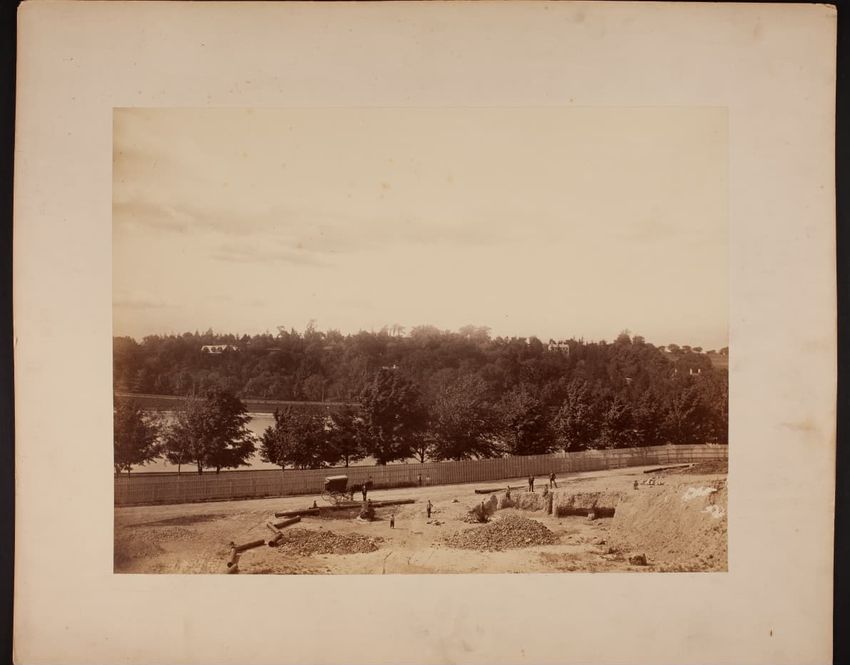 |
Dudley St.
Looking toward Boylston St. 619 Boylston St. is visible on the far left.
[Source: Historic New England]
|
 |
30 Irving St.
Looking down Irving St. toward Walnut St. Upland Rd. is on the right. The longtime home of Dr. George Sabine and later, the Oveson family, it was torn down in the late 1930s.
[Source: Brookline Preservation Department]
|
 |
Locomotive of the Boston and Albany Railroad, March 21, 1950
Engine no. 316 heading west as it crosses under the Aspinwall Ave. bridge. In the distance is 232 Aspinwall Ave. and in the foreground is 233 Aspinwall Ave., both still standing. On the right is the start of the side track for freight trains that will unload at destinations in Brookine Village.
|
 |
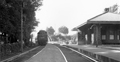
Brookline Village Station, January 18, 1941
Boston and Albany Railroad Locomotive No. 307, looking east. The house at 21 Pearl St. and the rear of the movie theater are on the right.
|
 |
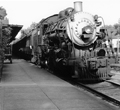
Beaconsfield Train Station, September 8, 1926
Boston and Albany Railroad Locomotive No. 309, looking west.
|
 |
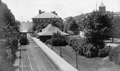
Brookline Village Station, September, 3, 1937
Boston and Albany Railroad Locomotive No. 311, looking east. The house at 21 Pearl St. is on the right.
|
 |
Locomotive of the Boston and Albany Railroad, circa 1910
Heading east at the Brookline Hills Station. The Manual Training School is behind the station The High School is on the right..
|
 |
25 Goddard Ave.
This house, which was torn down after a fire in 1949, was built by Isaac Cook in 1809. In 1827, Cook built for his younger son the well-known “Cook Cottage” right down the hill from this house. Circa 1878 James Lovell Little and his wife, Mary Revere Little, acquired both this house and the cottage. It is not known why but atlases of the time label the main house as the property of Mary R. Little and the cottage as property of James L. little.
[Source: Digital Commonwealth]
|
 |
Pond Ave., 1956
Looking southwest from Lower Washington St. Ten years after this photo was taken every structure in the foreground of the photo had been demolished as part of an urban renewal project.
[Source: Digital Commonwealth]
|
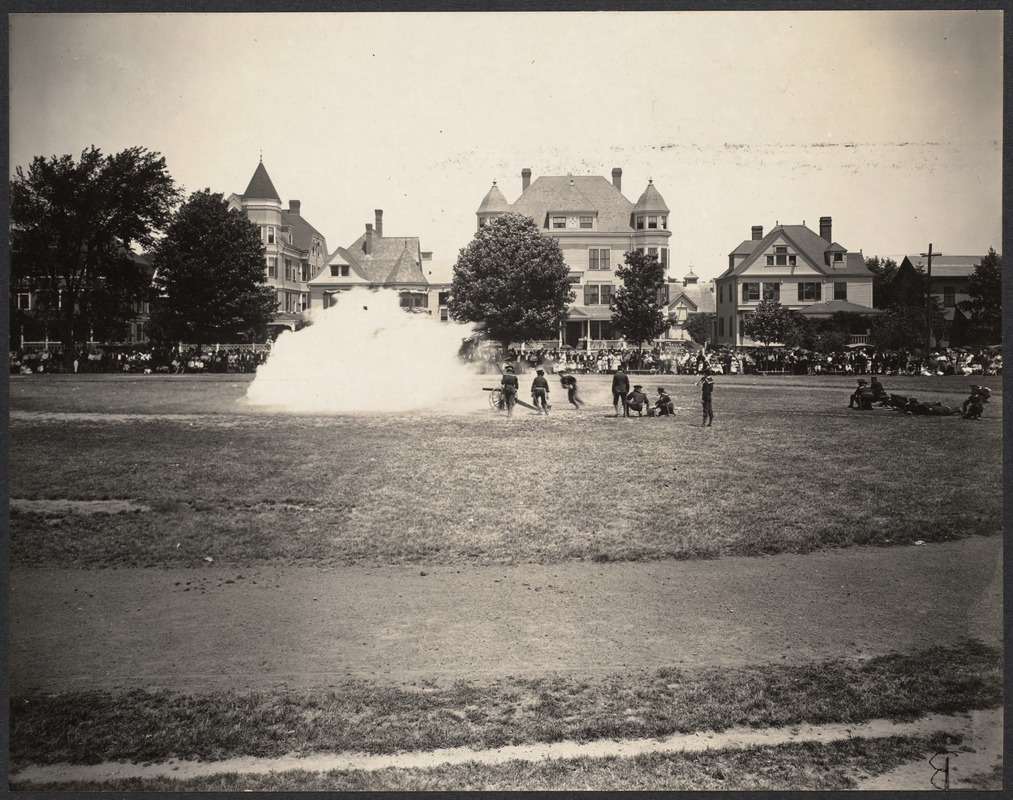 |
Cypress St. Playgound, Annual High School Battalion Drills
This is one of two photos showing an annual competition among high school drill battalions held on the Cypress St. playground every Memorial Day. Looking north at Davis Ave., all the houses are still standing. From left to right:
- 201 Davis Ave., hidden behind trees
- 195 Davis Ave., partial view.
- 191 Davis Ave. with the double towers
- 185 Davis Ave.
- 181 Davis Ave.
- 179 Davis Ave.
Behind the crowd, center photo, is a wagon advertising “Ball’s Homemade Bread”. J. G. Ball was a baker in Cambridgeport from the 1870s into the early 1900s.
[Source: Digital Commonwealth]
|
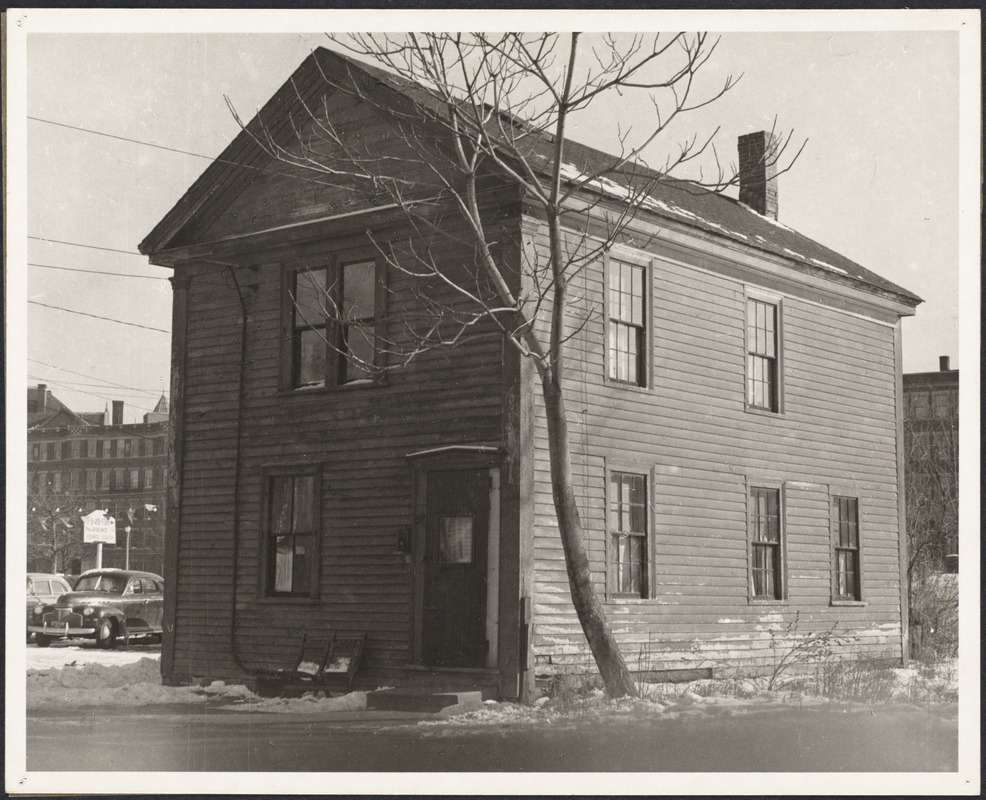 |
624 Brookline Ave.
The house at 624 Brookline Ave., roughly across from the Robert Winthrop School and initially numbered 39 then 103 and finally 624, was essentially the home of members of the Bingham family for its entire existence. The Binghams, Irish immigrants, moved in circa 1880. By the 1940s two unmarried children remained. John Bingham died in 1958 and Elizabeth Esther Bingham died in 1959 at the age of eighty.
The apartment buildings on the Riverway in Boston can be viewed in the rear. The town ordered the demolition of the house in 1961 and, in the coming decade, would demolish the entire neighborhood known as “The Marsh”.
[Source: Digital Commonwealth]
|
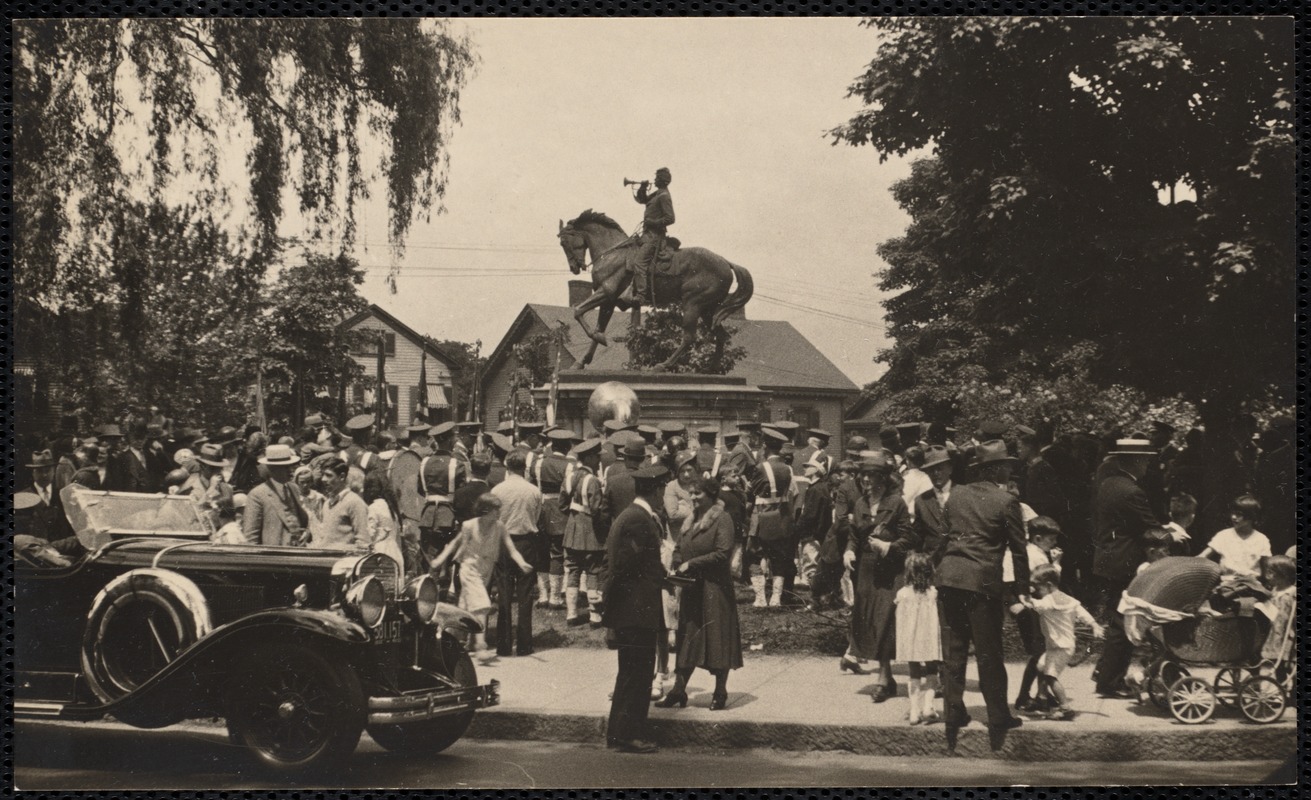 |
Celebration at Soldiers' Monument
A Duesenberg convertible, then America’s fastest and most expensive automobile, is in the foreground.
[Source: Digital Commonwealth]
|
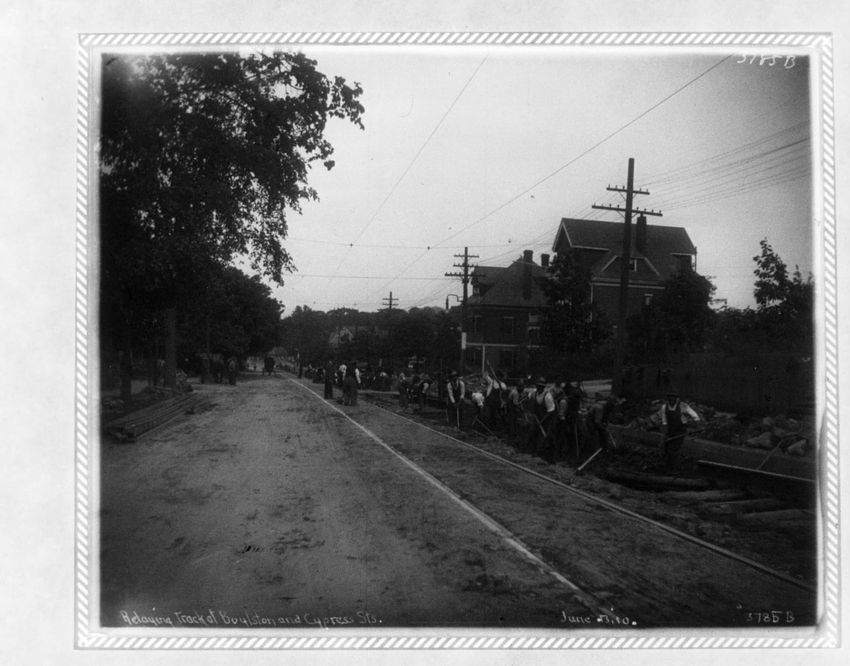 |
Boylston St. at Kennard Rd., 1910
Looking east on Boylston St. On the right is Kennard Rd. followed by 404 and 402 Boylston St., both still standing. Cypress St. crosses at the bottom of the hill.
[Source: Historic New England]
|

 The Society
 Program Archives