|
The Society
Historical Information
Photo & Map Collections
Exploring Brookline
Links
Program Archives
|
Photo Collection
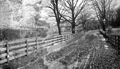 |
Reservoir Rd., 1903
Looking sorth as the road approaches Boylston St. From left to right:
- Foreground left: the land of Ebenezer Warren Reed that will soon become the site of the Heath School
- 39 Eliot Crescent, on the far left; a three-story apartment building built in 1901, still standing
- Houses on Duffy Court, Eliot Crescent, and Boylston St.
- At the end of Reservoir Road at the corner of Boylston Street – the house of Ebenezer Warren Reed
(ID) 123
(Slide ID) P-9-2
[Source: William Robert Murphy Collection]
|
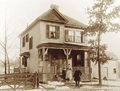 |
246 Clyde St., House of Francis Ouimet, 1900
Arthur Ouimet acquired this house, newly-built, in 1900 and rented it out for three years before moving in with his own family. Francis Ouimet, his son, later worked as a caddie at the Country Club, located directly across the street, and famously won the U. S. Open in 1913.
In 2020, Tom Hynes, a member of the Country Club who also lived on Clyde St., acquired the house. Hynes, with donations from fellow Country Club members, initiated a complete restoration of the house to its original condition, including period furnishings. The project was nearing completion as of this writing in June, 2022, with the final disposition of the house yet to be determined.
[Source: New York Times]
|
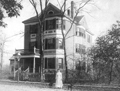 |
254 Clyde St.
Arthur Ouimet, the father of the famous golfer, Francis Ouimet, acquired this house in 1900 along with the house next door at 246 Clyde St. He rented it out while his family lived at #246. The woman and dog pictured match the profile of Mrs. Ouimet, though this cannot be confirmed. Still standing.
[Source: Brookline Preservation Department]
|
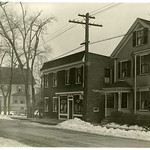 |
276 - 290 Clyde St., March 1921
Left to right: 276, 286/288, 290 Clyde St., all still standing. #288 was a store and had two gas pumps in front for many years.
[Source: Olmsted]
|
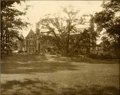 |
155 Clyde St.
“Fernwood”, the house built in 1910 for Alfred Douglass, still standing on Fernwood Rd.
[Source: Olmsted]
|
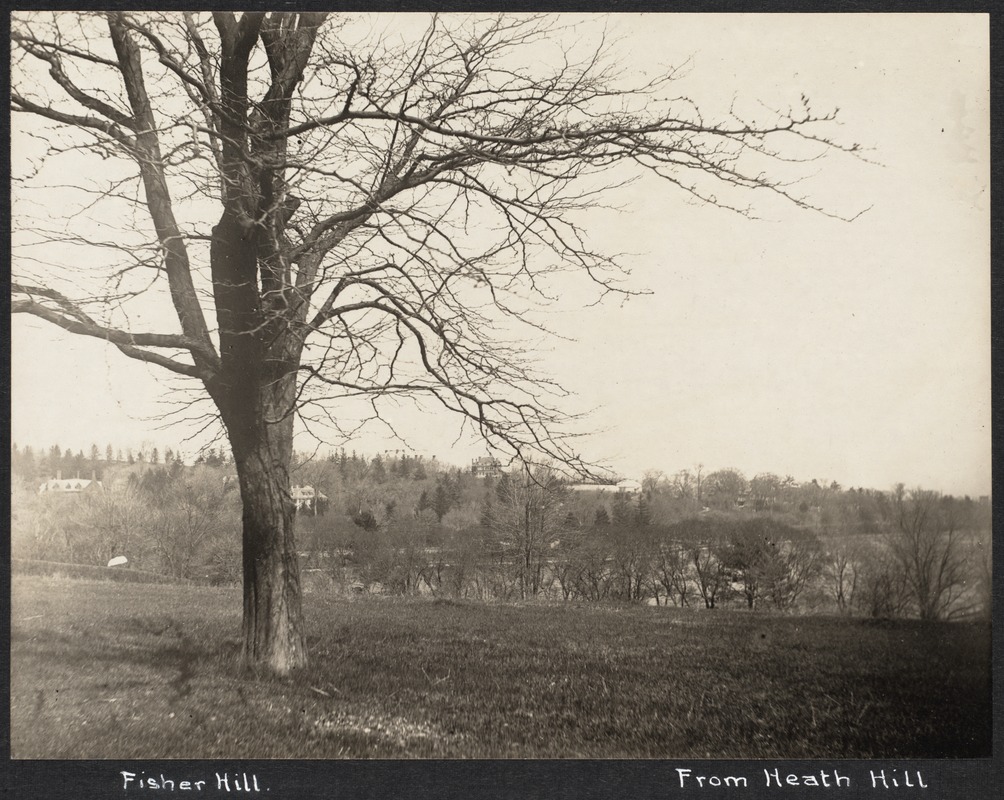 |
View of Fisher Hill from Heath Hill
Looking north across the reservoir and Boylston St. from Heath Hill. From right to left:
- The long white structure of the green house of Joseph White
- The house on the top of the hill at 73 Seaver St., built in 1892, still standing
- The large structure barely visible behind the trees is the Longyear estate at 120 Seaver St. Still standing
- The well-known Boylston - Hyslop - Lee House partially obscured behind the tree; still standing
[Source: Digital Commonwealth]
|
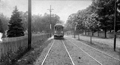 |
Boylston St. Trolley, 1910
Traveling inbound in the area of Chestnut Hill Ave.
|
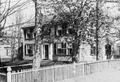 |
Samuel Clark House, 322 Walnut St.
This house was built in 1715 by Samuel Clark (the 2nd) and was eventually occupied by 6 generations of the Clark family until its demolition in 1902. Caleb Clark, born in 1789 in the fourth generation, took ownership of the house and, in 1862, his son, another Samuel, constructed a house next door at 310 Walnut St. Samuel’s daughter, Helen Clark, took over the house with her husband, William S. Cutler. When they moved to a new house steps away on Chestnut St., the Clark house was rented until 1898 to the just-widowed Alma Charity Mears Macallister (see additional photo of the house).
[Source: Digital Commonwealth]
|
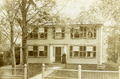 |
322 Walnut St.
This house was built in 1715 by Samuel Clark (the 2nd) and was eventually occupied by six generations of the Clark family until its demolition in 1902. Samuel Clark from the fifth generation eventually took over the house. When, in 1862, he built a house for himself next door, at 310 Walnut St., his daughter, Helen, and her husband, William S. Cutler assumed ownership of the house. When they moved to a new house steps away on Chestnut St., they rented out the Clark house.
The house was rented by Alma Charity Mears Macallister, “Mrs. Richard Macallister”, the woman posed in front of the house. She had been living in India where her husband ran cotton/jute/hemp mill operations employing more than 1,400 workers and where he was also vice-consul general for the United States. When he died in April, 1882, at the age of 52, Alma returned to the United States with her son, Richard, who had spent his entire 13 years in India. After living in Brookline Village for a few months they moved to the Clark house in 1883. In 1898, the two moved around the corner to 31 Clark Road and the Clark house remained empty until it was demolished in 1902.
|
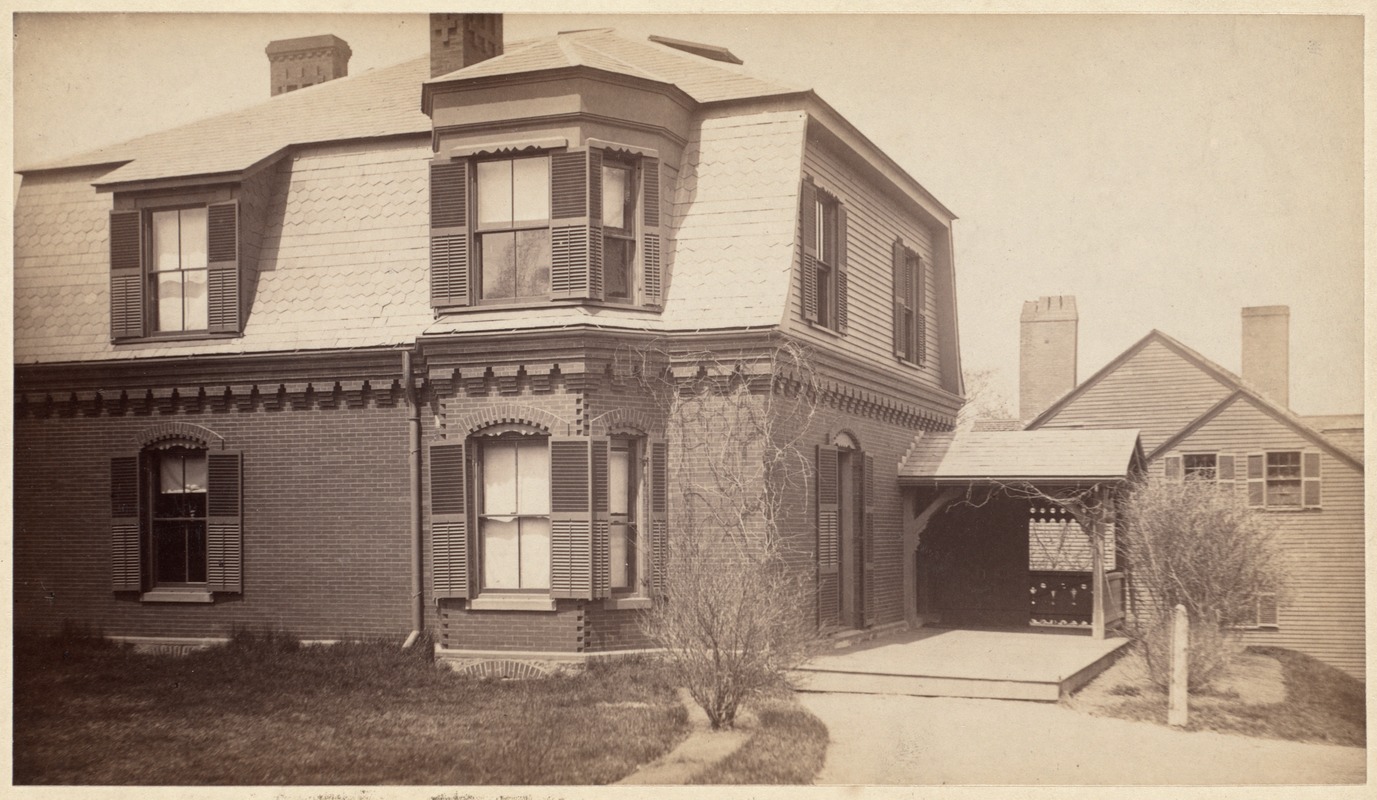 |
195 Walnut St., 1885
House of Charles Ware, constructed by Edward Philbrick who lived across the street, still standing. Charles Ware, a music transcriber and educator, was an abolitionist who worked with freedmen in Port Royal, part of the areas of South Carolina controlled by the Union Army. He later contributed to the publication of Slave Songs of the United States.
|
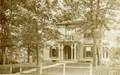 |
310 Walnut St.
In 1715, the house next door at 322 Walnut St was built by Samuel Clark (the 2nd) and was eventually occupied by 6 generations of the Clark family until its demolition in 1902. In 1862, Samuel Clark from the 5th generation at 322 constructed this house at 310 Walnut St. Samuel’s daughter, Helen Clark, took over the house at 322 Walnut with her husband, William S. Cutler. Both houses are no longer standing.
|
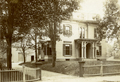 |
310 Walnut St.
In 1715, the house next door at 322 Walnut St was built by Samuel Clark (the 2nd) and was eventually occupied by 6 generations of the Clark family until its demolition in 1902. In 1862, Samuel Clark from the 5th generation at 322 constructed this house at 310 Walnut St. Samuel’s daughter, Helen Clark, took over the house at 322 Walnut with her husband, William S. Cutler. Both houses are no longer standing.
|
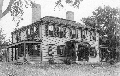 |
Ebenezer Heath House, 30 Heath St.
Built 1791, still standing.
[Source: Brookline Preservation Department]
|
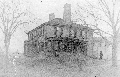 |
Ebenezer Heath House, 30 Heath St.
Built 1791, still standing.
[Source: Brookline Preservation Department]
|
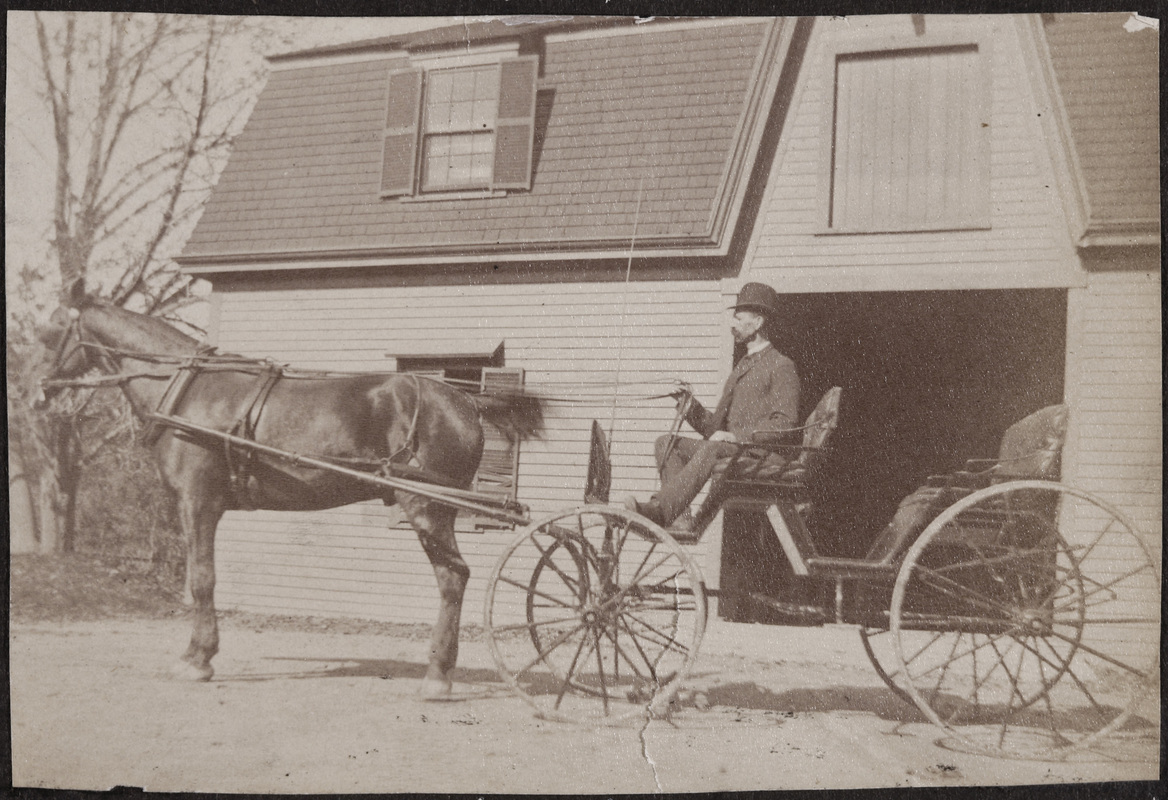 |
Coachman, 35 Heath St.
House of Francs Cabot, no longer standing. The coachman is identified only as "Michael". It is noted that a Michael J. Lynch was a coachman for the Cabot family in the 1891 town directory though any match would be highly speculative.
[Source: Digital Commonwealth]
|
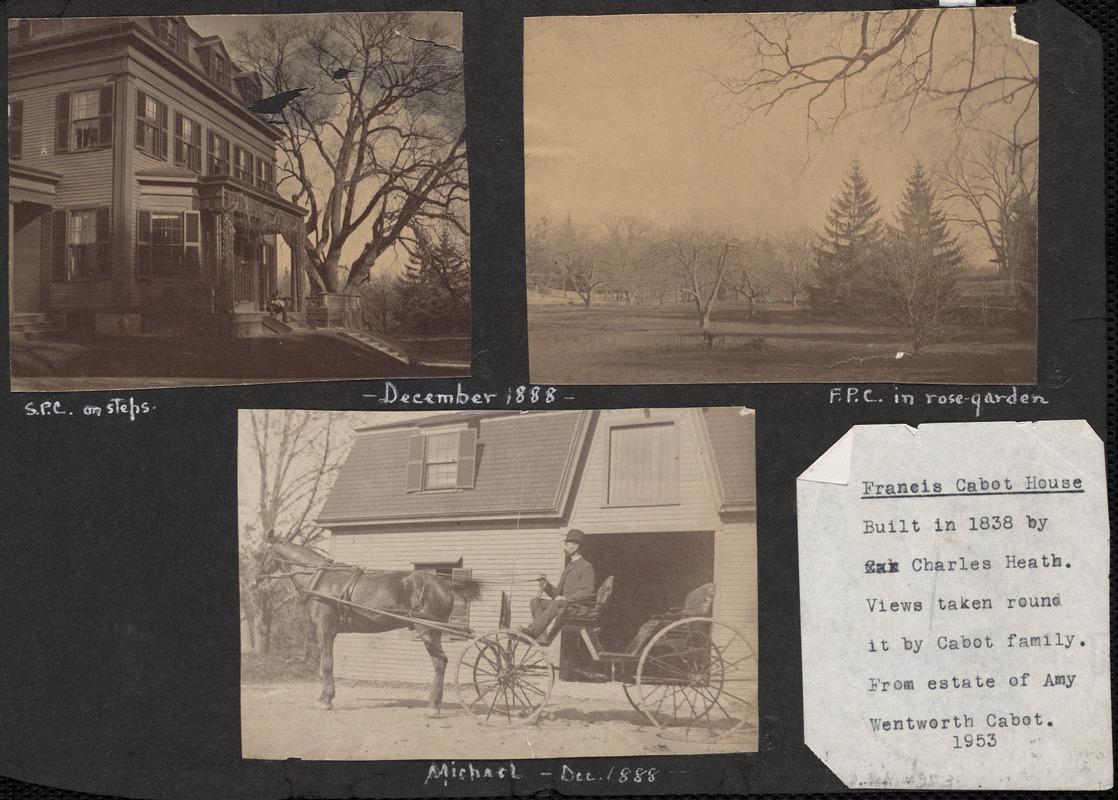 |
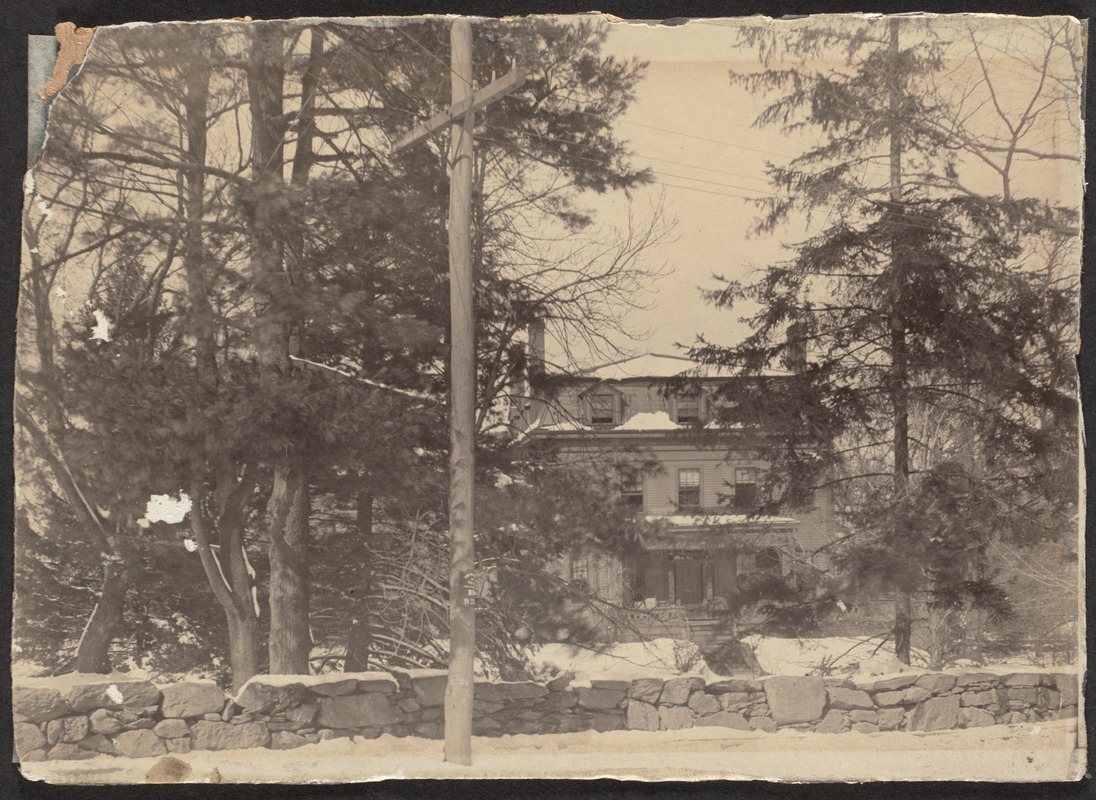
35 Heath St.
House of Francs Cabot, no longer standing
[Source: Digital Commonwealth]
|
 |
35 Heath St.
House of Francs Cabot, no longer standing
[Source: Digital Commonwealth]
|
 |
House of George Bacon, 70 Heath St. circa 1860
It is reasonably likely that this stereoview shows George Bacon, Olivia (Grant) Bacon, and four of their children. Circa 1860, the Bacons were living on Walnut Street across from the First Parish Church when they purchased this property, tore down the existing house, and erected this large mansion which still stands today. The house was purchased after the end of the Civil War by Augustus and Elizabeth (Lawrence) Lowell who named it "Sevenels" after the seven members of their family.
Photography studio of Black and Batchelder, 172 Washington St. Boston.
|
 |
House of Edward Atkinson, Heath Hill
[Source: Brookline Preservation Department]
|
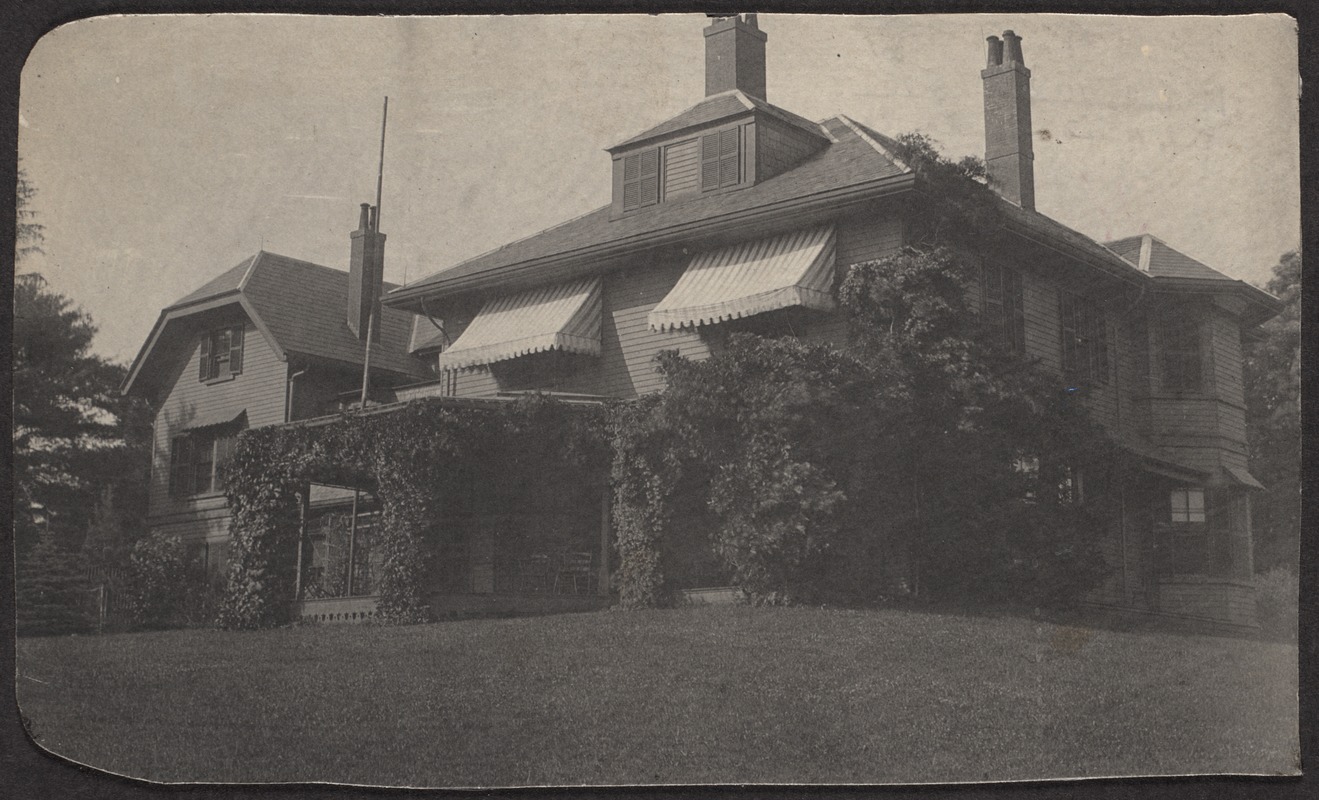 |
House of Edward Atkinson, Heath Hill
[Source: Digital Commonwealth]
|
|

 The Society
 Program Archives