 |
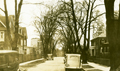
Hawes St., April 1935
[Source: Brookline Preservation Department]
|
 |
10 Hawes Pl., November, 1910
The George Quincy House, built in 1909, on the corner of Hawes Place and Borland Street.
[Source: Smithsonian]
|
 |
26 Beech Rd., 1910
Designed in 1907 by Hartwell, Richardson & Driver for Joseph Gahm.
[Source: Smithsonian]
|
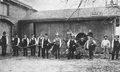 |
Hose Company No. 3, Chapel St. Station, Early 1880s
Located across the tracks of the Boston and Albany Railroad at the Chapel St. station. At the time, Carlton St. dipped down to the station. Along the tracks on the other side were several privately-owned buildings where this brick and wood stable owned by Dr. William K. Lawrence was used by Hose Company #3 to store their engine.
In late 1882, a Babcock Chemical Engine acquired by the town and housed nearby on Carlton St. A new company, Chemical Engine #1, was created and appears to have merged with Hose Company #3 in the next year. Chemical Engine #1 moved to their own building at 86 Monmouth St. when it opened in early 1887.
There appear to be two large extinguisher tanks, characteristic of chemical engines, at the front of the wagon in the photo.
[Source: Boston Publishing Co.]
|
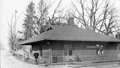 |
Chapel Station, Carlton & Colchester St.
Station for the Boston and Albany Railroad and pedestrian crossing; the southern end of Carlton St. is on the left; note same man as in the Longwood Station photo and the other man at the left hand corner of the building
|
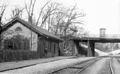 |
Early Longwood Station, Boston and Albany Railroad
Looking east with the Sears Chapel in the background. This was the initial location of the Longwood station of the Boston and Albany Railroad. Both its small physical size and its location were disliked by local residents. Additionally, the Chapel Station was just a short distance away, at the end of Carlton St., adding another time-sapping stop/start for the steam engines. After contentious town meetings in the early 1890s, it was decided to consolidate the two stations into one at today’s location of the Longwood stop. To facilitate access to the new station Chapel St. was created and the station opened in 1894.
Note same man as in the Chapel Station photo along with another man on the far side.
|
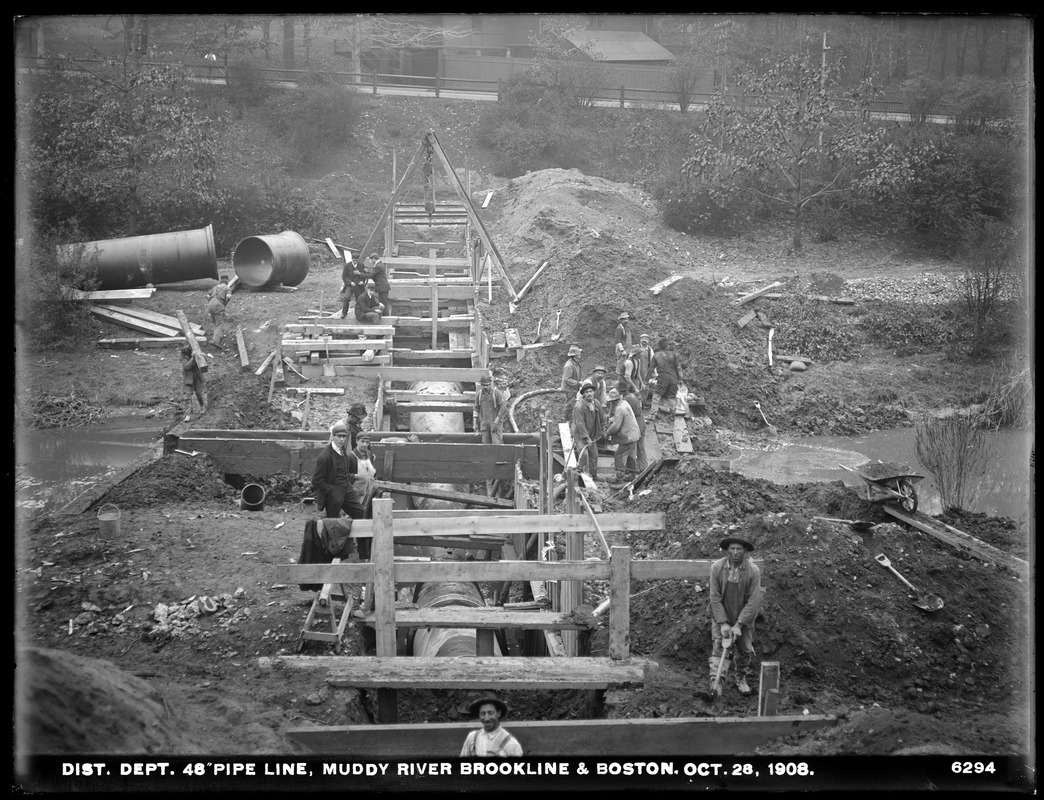 |
Muddy River Project, October 28, 1908
Looking north toward Chapel St. from the Muddy River just east of the Longwood Ave. bridge. In the foreground is the carriage house of the Richards estate, location of the present-day Longwood Towers. In the upper left corner is the rear of the house at 287 Kent St., still standing.
[Source: Digital Commonwealth]
|
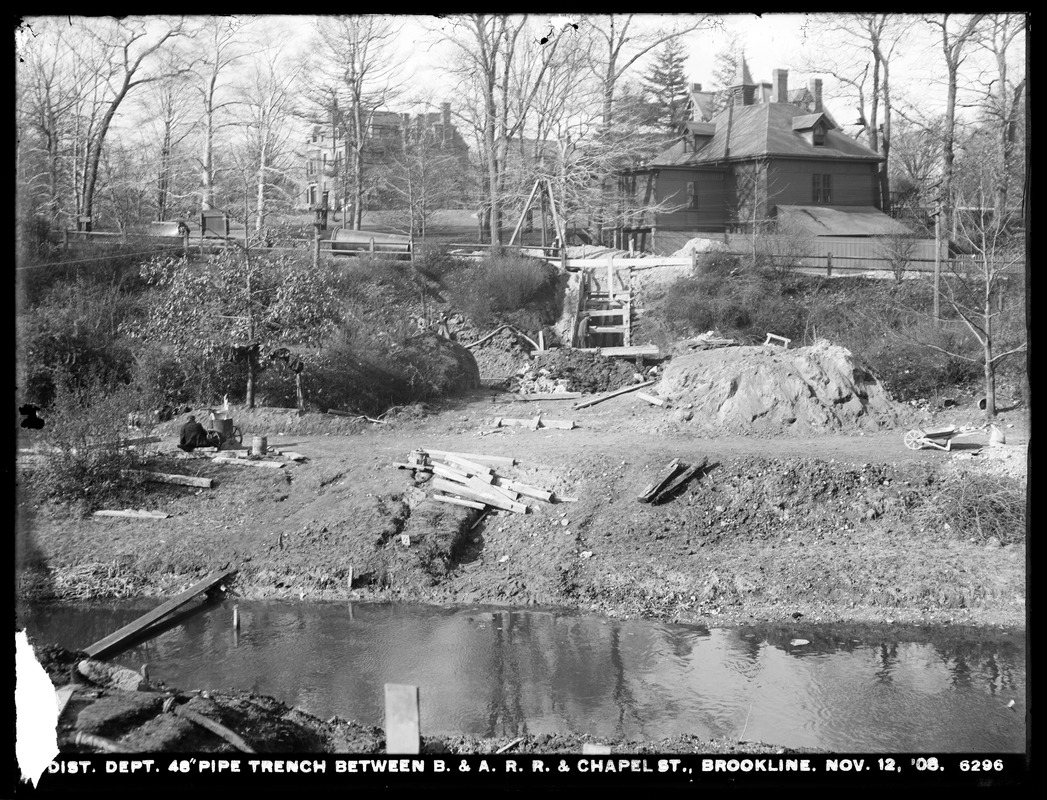 |
Muddy River Project, November 12, 1908
Looking north toward Chapel St. from the Muddy River just east of the Longwood Ave. bridge. In the foreground is the carriage house of the Richards estate, location of the present-day Longwood Towers. On the left is the rear of the house at 287 Kent St., still standing.
[Source: Digital Commonwealth]
|
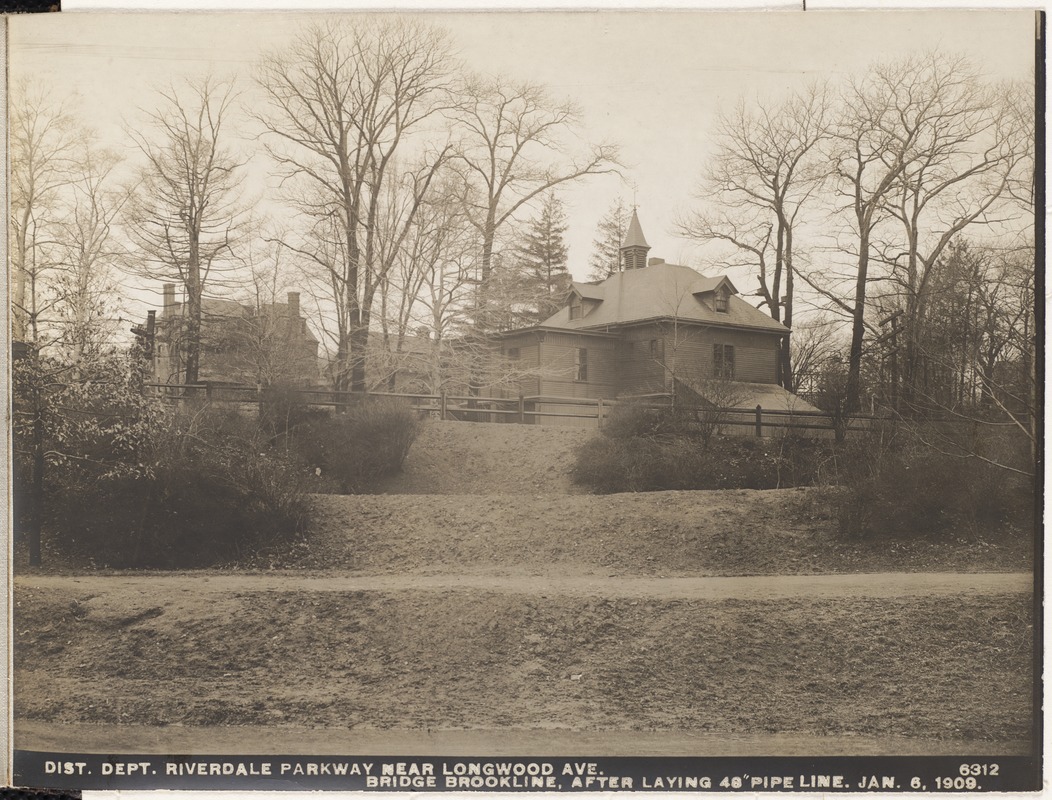 |
View toward Chapel St. from the Muddy River, 1909.
Looking north toward Chapel St. from the Muddy River just east of the Longwood Ave. bridge. In the foreground is the carriage house of the Richards estate, location of the present-day Longwood Towers. On the left, in the far distance, is the rear of the house at 287 Kent St., still standing. This photo shows the completion of the recent pipe-laying project conducted on the slopes in the foreground.
[Source: Digital Commonwealth]
|
 |
Longwood Station, Boston & Albany Railroad, 1907
|
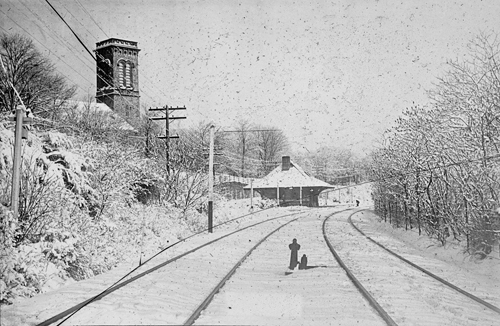 |
Longwood Station, Boston and Albany Railroad
[Source: Iowa State]
|
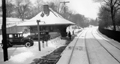 |
Longwood Station, Boston and Albany Railroad, 1930
Looking east. Chapel St. is on the left.
|
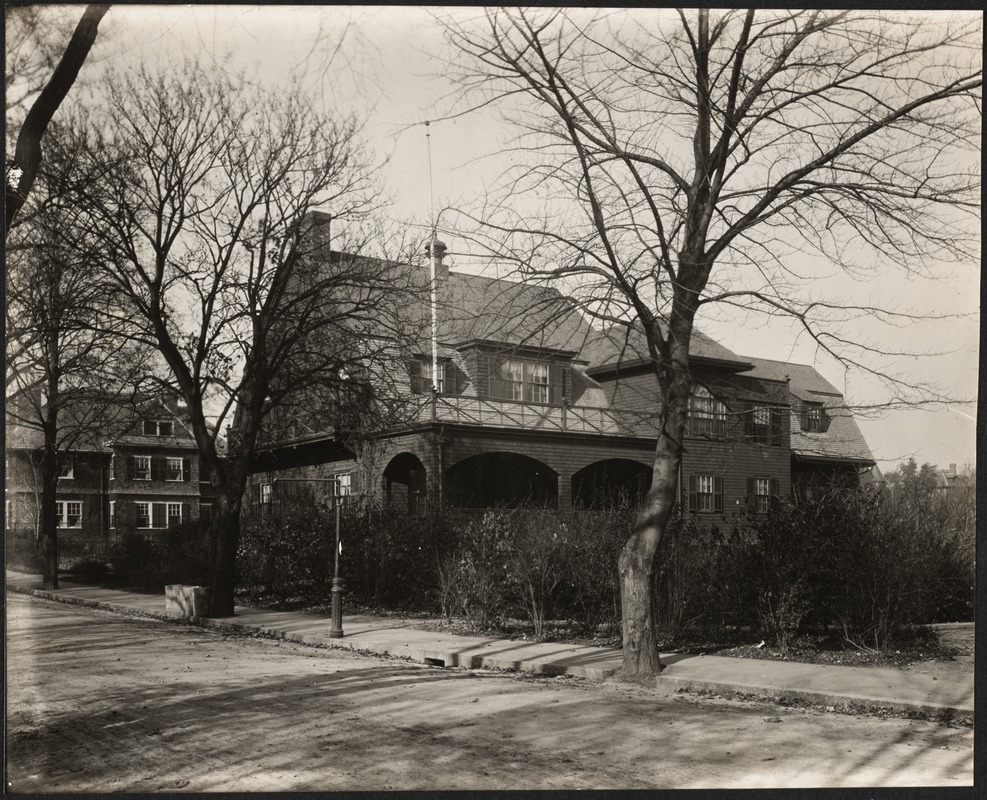 |
49 Francis St., The Riverdale Casino
Looking northwest, the playground is behind the house. The so-called casino was actually a recreational clubhouse for men built to look like a house in order to blend in with the neighborhood. It is no longer standing and its land has been taken over by the playground. To the left is 53 Francis St., no longer standing and also part of the playground today.
Note the feeder station hydrant used by the dirt-street-watering carts.
[Source: Digital Commonwealth]
|
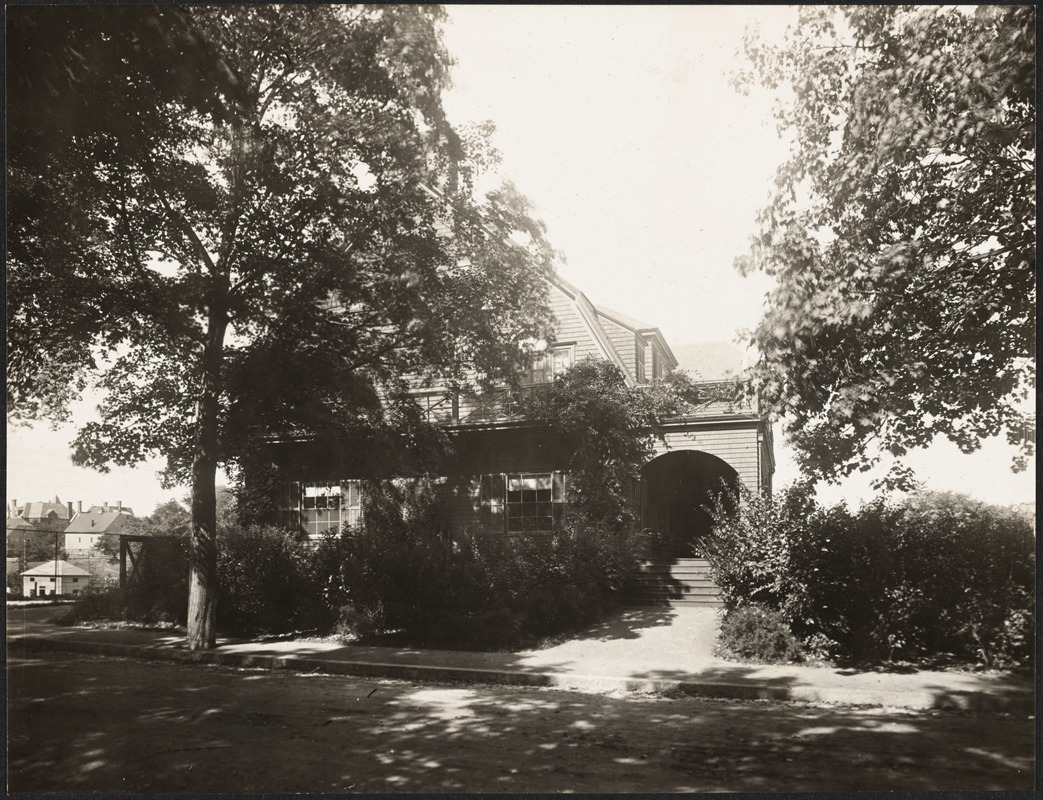 |
49 Francis St., The Riverdale Casino
Looking northwest, the playground is behind the house. The so-called casino was actually a recreational clubhouse for men built to look like a house in order to blend in with the neighborhood. It is no longer standing and its land has been taken over by the playground.
[Source: Digital Commonwealth]
|
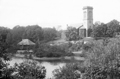 |
Sear's Chapel, Longwood Station, Muddy River
|
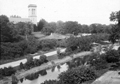 |
Muddy River & Sears Chapel
Newly constructed Longwood train station with Chapel St. behind it.
|
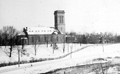 |
Sears Chapel, Longwood Area
Before the creation of Chapel St. and Longwood Station. David Sears house (now divided into townhouses) at the corner of Hawes & Colchester visible to the right
|
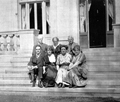 |
The Wightman Family, 43 Hawes St.
The family is seated on the steps of the mansion which was completed in late 1902 for George Henry Wightman, a wealthy steel magnate who worked with Andrew Carnegie. His son was an attorney who was married to Hazel Hotchkiss, a tennis champion. His daughter, Elizabeth Pope, lived across the street at 16 Monmouth and her family took over the mansion after the death of her mother in 1939. The building is used today by Boston University.
[Source: Brookline Preservation Department]
|
 |
Looking East From Longwood Ave. Bridge, 1907
Boston in the distance. From left to center: Sears Chapel, Chapel St., Boston & Albany railroad tracks, walking paths on either side of the Muddy River.
|
 |
Looking East From Longwood Ave. Bridge, 1907
From left to center: Sears Chapel, Chapel St.,Longwood Station of Boston & Albany Railroad, the Muddy River.
|
 The Society
 Program Archives