 |
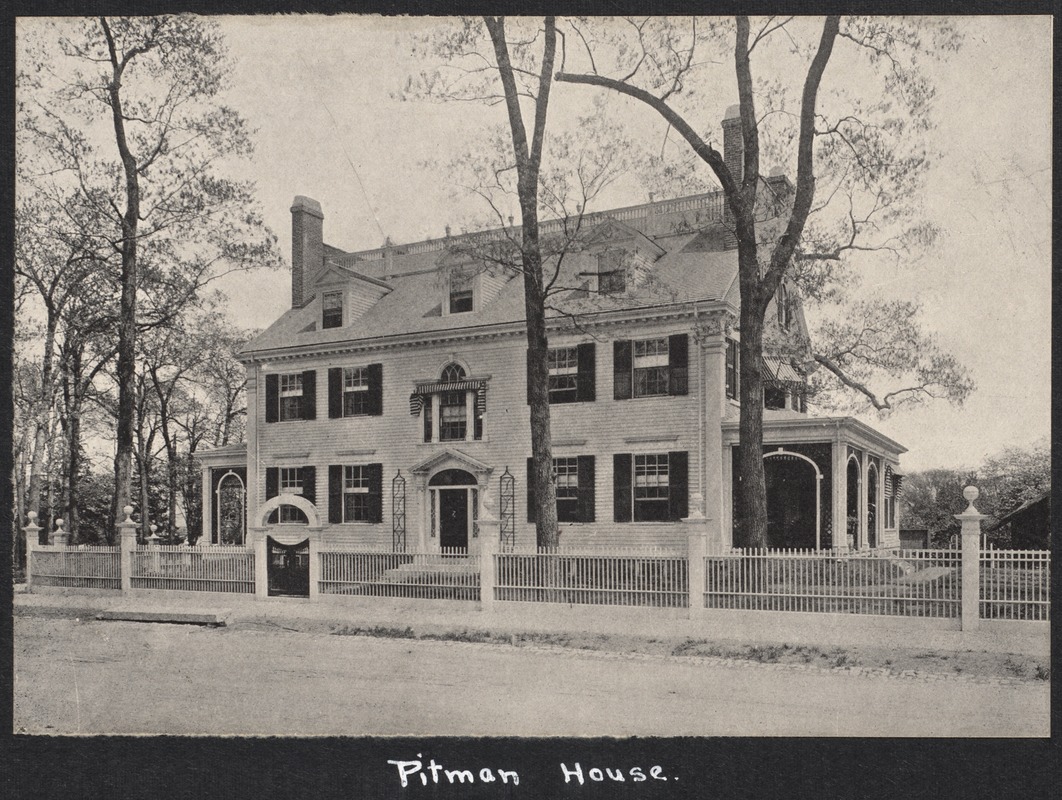
121 Carlton St. "Pittman Place"
Corner of Euston St. (on the left).
[Source: Digital Commonwealth]
|
 |
156 Ivy St., Rear
Circa 1910. Shot by a postcard photographer for wealthy heiress Blanche Shimmin who lived there 1906-1910.
|
 |
Amory Park and Cottage Farm
Looking north across Amory Park from 1236 Beacon St. (no longer standing). Background left, the rear of 200 Ivy St. is viewed and, on the right, 21 Mason St.
[Source: Brookline Preservation Department]
|
 |
122 Carlton St.
[Source: Smithsonian]
|
 |
165 Ivy St.
No longer standing. The former house of Henry Saltonstall Howe and Katharine Dexter (Wainwright) Howe. Henry S. Howe was a wealthy cotton manufacturer and commission merchant. The Howes were living on adjacent Essex St. when they had this house constructed in 1902. Henry Howe died in 1931, three months after the death of his wife, and there are no recorded occupants of the house after that. By 1941, the house had been torn down and the property was the site of the first of the four houses that remain there today.
[Source: Smithsonian]
|
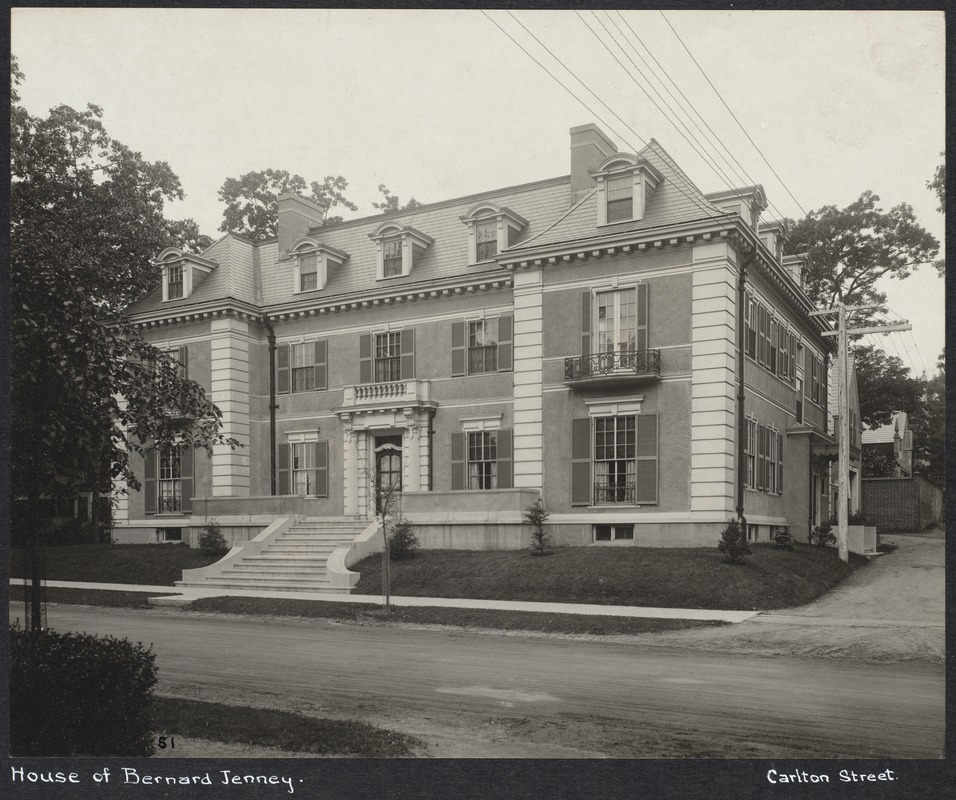 |
132 Carlton St.
Still standing.
[Source: Digital Commonwealth]
|
 |
Williston Rd., November 1915
Looking northwest from Evans Rd. toward Corey Rd. #55 at the corner.
[Source: Olmsted]
|
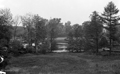 |
Hall's Pond and Amory Park, circa 1910
Photographed from the backyard of the house of wealthy heiress Blanche Shimmin at 156 Ivy St. (still standing). The view is across Hall’s Pond toward Amory St. Faintly visible on the far right is 36 Amory St.
|
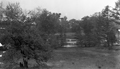 |
Hall's Pond and Amory Park, circa 1910
Photographed from the backyard of the house of wealthy heiress Blanche Shimmin at 156 Ivy St. (still standing). The view is across Hall’s Pond toward Amory St. Partially visible in the center is 14 Amory St. A stone wall which is also still standing in the park can also be seen.
|
 |
Salisbury Rd., November 1915
Looking east from Williston. #51 foreground left.
[Source: Olmsted]
|
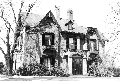 |
Frederick Sears House, 24 Cottage Farm Rd.
In 1849, David Sears laid out the Cottage Farm neighborhood and built houses for himself, his four daughters, and this house for his son, Frederick, which still stands.
[Source: Brookline Preservation Department]
|
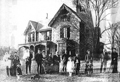 |
24 Cottage Farm Rd.
In 1849, David Sears laid out the Cottage Farm neighborhood and built houses for himself, his four daughters, and this house for his son, Frederick, which still stands. The large apparently-extended family is unidentified.
[Source: Brookline Preservation Department]
|
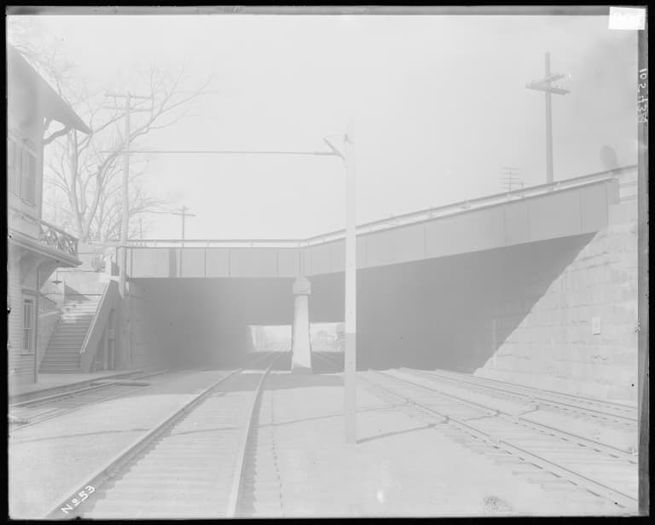 |
Cottage Farm Station, Boston and Albany Railroad
Looking northwest from the northeast corner of Brookline. Commonwealth Ave. is on the right with stairs going up to Essex St. on the left. Today, the wall on the right has been removed, the Commonwealth Ave. bridge span lengthened, and the Massachusetts Turnpike now runs alongside the railroad tracks.
From the Boston & Albany Railroad Company photographic collection of Historic New England.
[Source: Historic New England]
|
 |
Cottage Farm Station, Boston and Albany Railroad
Looking southeast from the northeast corner of Brookline. On the right is 145 Essex St., no longer standing.
[Source: Connecticut Digital Archive]
|
 |
Home of Amos Lawrence, Prescott St.
Looking east on Ivy St. to the right.
[Source: Brookline Preservation Department]
|
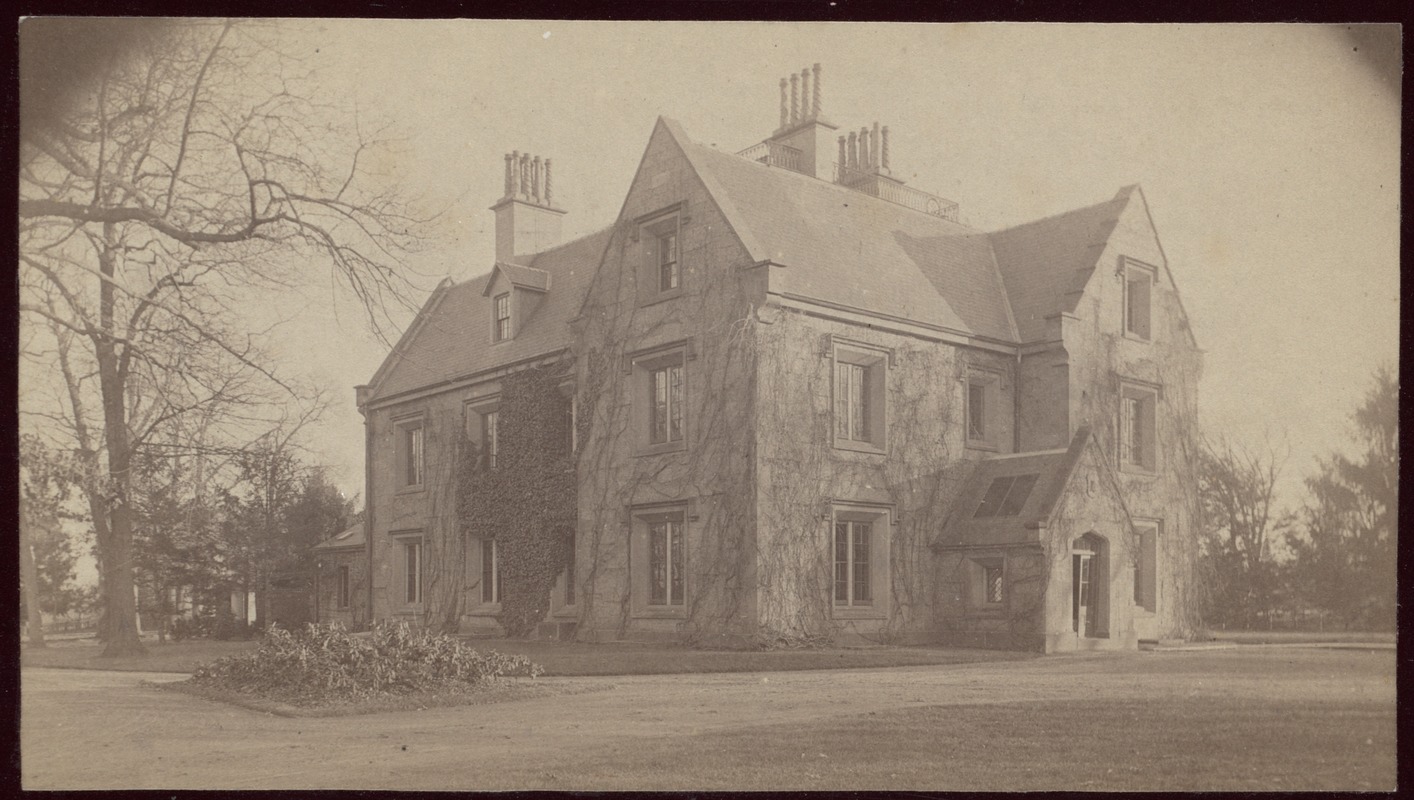 |
Original Home of Amos Lawrence, Prescott St.
Looking southeast at the original location of the house on Prescott St. Ivy St. is to the right and a faint image of the tower of the Episcopal Church of Our Saviour on the corner of Carlton and Monmouth can be glimpsed in the distance on the right. The house was built in 1851 by Amos Lawrence and, in the summer of 1899, turned ninety degrees counter clockwise and moved a small distance to its present location at 135 Ivy St. where it is now the home of the president of Boston University.
[Source: Digital Commonwealth]
|
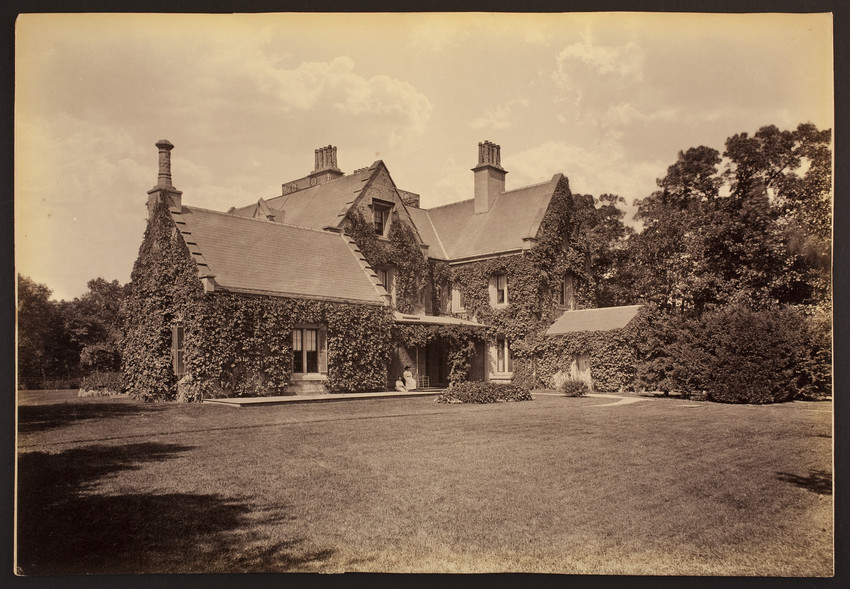 |
Home of Amos Lawrence, Prescott St.
Looking northwest at the rear of the Prescott St. house of Amos Lawrence viewed from the location of present-day Carlton St. The house was later turned ninety degrees counter clockwise and moved a small distance to its present location at 135 Ivy St., now the home of the president of Boston University.
[Source: Historic New England]
|
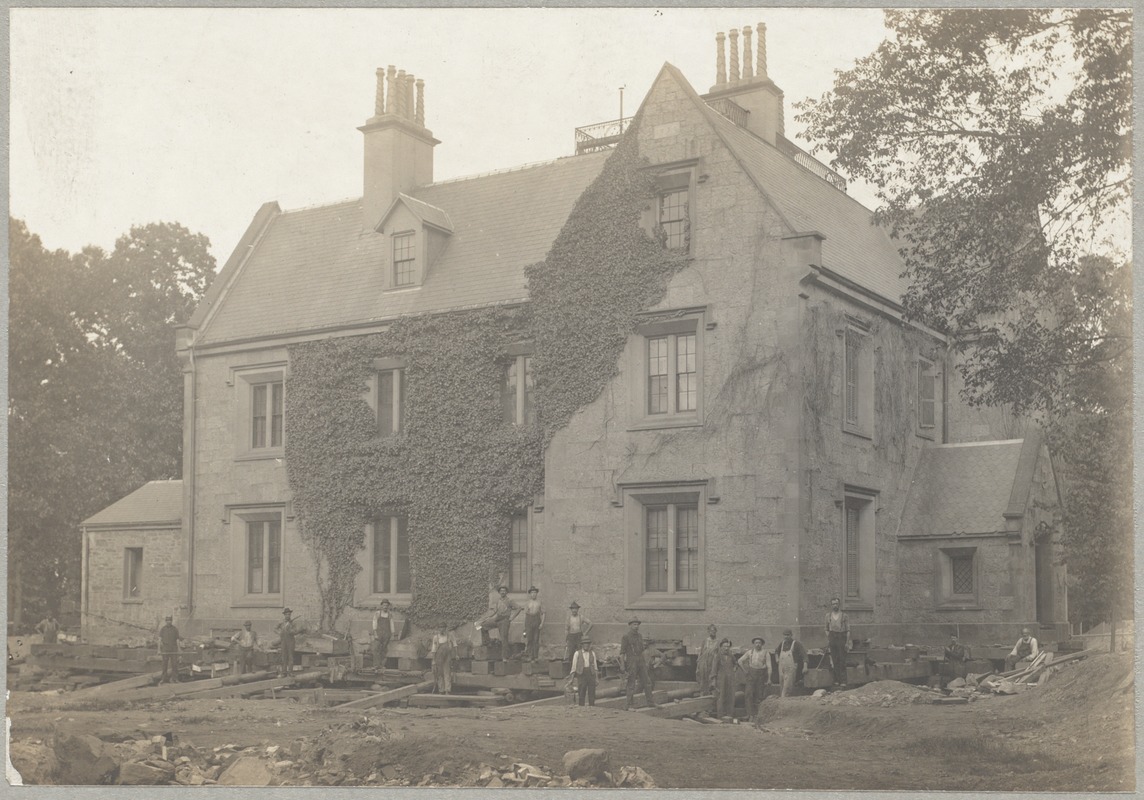 |
Relocation of Former Amos Lawrence House From Prescott St. to Ivy St., Summer 1899
The house was built in 1851 on Prescott St. by Amos Lawrence. After his death in 1886, ownership of the house was assumed by his daughter, Hettie Cunningham. By 1899, Euston St. had been opened as a public way along with an extension of Carlton St. northward from Ivy St. to Mountfort St. This created a new block suitable for development and the Cunninghams divided the block into a 2 x 3 matrix of individual lots. The house is being is being turned ninety degrees counter clockwise and moved a small distance from the center of the block to the pair of lots at the corner of Carlton and Ivy where the house is at its present location of 135 Ivy St., now the home of the president of Boston University.
[Source: Digital Commonwealth]
|
 |
23 Prescott St.
[Source: Brookline Preservation Department]
|
 |
23 Prescott St.
The rear of the house is on the left. To the left is 9 Prescott St., still standing. In the distance on the right is the rear of 132 Carlton St., still standing.
[Source: Brookline Preservation Department]
|
 The Society
 Program Archives