 |
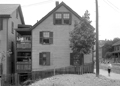
141 Boylston St.
A partial view of the rear of a house facing Kerrigan Place is on the left. To its right is the side of 141 Boylston St. Number 141 needed to move back for the widening of Boylston St. and it appears that it was torn down, possibly due to the lack of available expansion room.
Across the street are, from left to right, the side of 98 Boylston St. (still standing), an outbuilding of 149 Walnut St., and 120/122 Boylston St.
(ID) 086
(Slide ID) P 5-14
[Source: William Robert Murphy Collection]
|
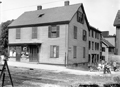 |
145 Boylston St., 1912
Looking at the north side of Boylston St. during the widening of Boylston St. To the right is Kerrigan Place and the houses visible in the rear are on its west side. On the left is 145 Boylston St. This building has an ambiguous identity. There had been a larger rooming house there that was no longer listed after 1901. This smaller structure appears in subsequent atlases but there are no records of it in town directories and, notably, no record of the grocery store that is evident. It needed to move back for the widening of Boylston St. and it appears that it was torn down instead, possibly due to the lack of available expansion room - it was right up against a house behind it on Kerrigan Place.
(ID) 003
(Slide ID) ?
[Source: William Robert Murphy Collection]
|
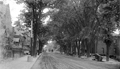 |
Boylston St., 1912
Looking west from #148. The sign for Walnut Path can be seen in the left foreground followed by the Lincoln School buildings. On the right is the brick Boylston School building (no longer standing) followed by 199-201 Boylston St., still standing.
(ID) 009
(Slide ID) P 5-4
(Notes) Replaces existing image
[Source: William Robert Murphy Collection]
|
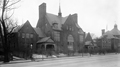 |
Lincoln School
On the right is the Lincoln Grammar School. On the left is the first Manual Training School which opened in 1894. Both buildings became the Lincoln School when the Manual Training relocated to a new building on Tappan St. in 1903. On the far left is the entrance to Walnut Path.
(ID) 050
(Slide ID) P 25-3
[Source: William Robert Murphy Collection]
|
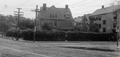 |
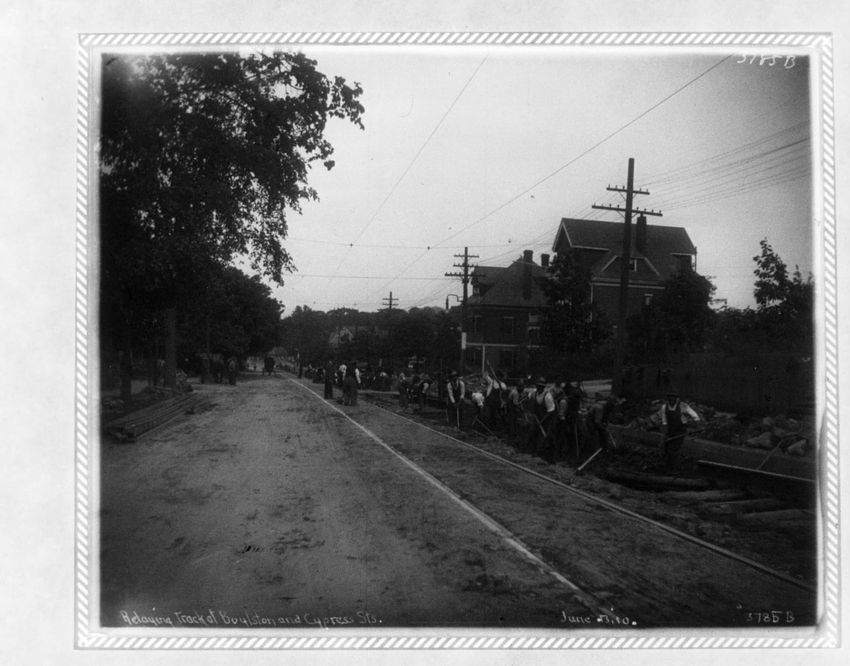
Boylston St. at Cypress St. 1912
Looking east on Boylston St. with Cypress St. on the right. On the corner is the house at 136 Cypress St., no longer standing. To the right is a partial view of 144 Cypress St., still standing. In the middle background are the rears of houses on E. Milton Rd., still standing.
(ID) 011
(Slide ID) P-5-6
(Notes) Replaces existing image
[Source: William Robert Murphy Collection]
|
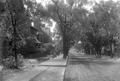 |
Boylston St., 1912
Looking west on Boylston St. The Lincoln School is on the left. On the immediate right is a partial view of 199/201 Boylston St. which is still standing.
(ID) 005
(Slide ID) P-5-9
[Source: William Robert Murphy Collection]
|
 |
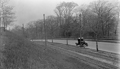
Boylston St. at Kennard Rd., 1910
Looking east on Boylston St. On the right is Kennard Rd. followed by 404 and 402 Boylston St., both still standing. Cypress St. crosses at the bottom of the hill.
[Source: Historic New England]
|
 |
Wright's Hill, Boylston St., May 19, 1920
(ID) 016
(Slide ID) P-34-1
[Source: William Robert Murphy Collection]
|
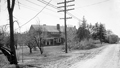 |
1106 Boylston St.
(ID) 017
(Slide ID) P-2-15
(Notes) Two pieces
[Source: William Robert Murphy Collection]
|
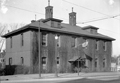 |
Boylston School
74 Davis St. can be glimsped in the rear.
(ID) 079
(Slide ID) P
[Source: William Robert Murphy Collection]
|
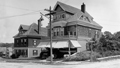 |
Boylston St. at Kennard Rd.
Going east toward Cypress St. is to the left. From right to left:
- The street sign is oddly labeled “Clark Road”, which is on the other side of Boylston St., instead of Kennard Rd.
- 404 Boylston St. Highly renovated today and now 6 Kennard Rd.
- 402 Boylston St., still standing
(ID) 075
(Slide ID) P 3-2
[Source: William Robert Murphy Collection]
|
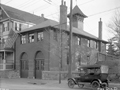 |
Station D, First Location, 796 Boylston St., Appearance Post-1900
Located on the south side of Boylston St. east of Reservoir Rd. It opened in January 1891 and was eventually replaced by the current Station 4 located across the street at 827 Boylston St. To the left is 794 Boylston St., still standing.
This building is the second of two iterations which have presented some identification challenges. First, the fire house that was built two years later, in 1893, on Devotion St. had a virtually identical front façade and doors and the two have been conflated in publication. Second, photos after 1900 show a very different-looking building. But a closer look reveals that it’s the same building with several new feet added at the bottom and totally different doors added. This was because Boylston St. was lowered six feet for the trolley installation in 1900.
(ID) 042
(Slide ID) P 25-24
[Source: William Robert Murphy Collection]
|
 |
Outer Boylston St. (Speculative)
This is probably outer Boylston St. looking east
(ID) 090
(Slide ID) P 102-19
[Source: William Robert Murphy Collection]
|
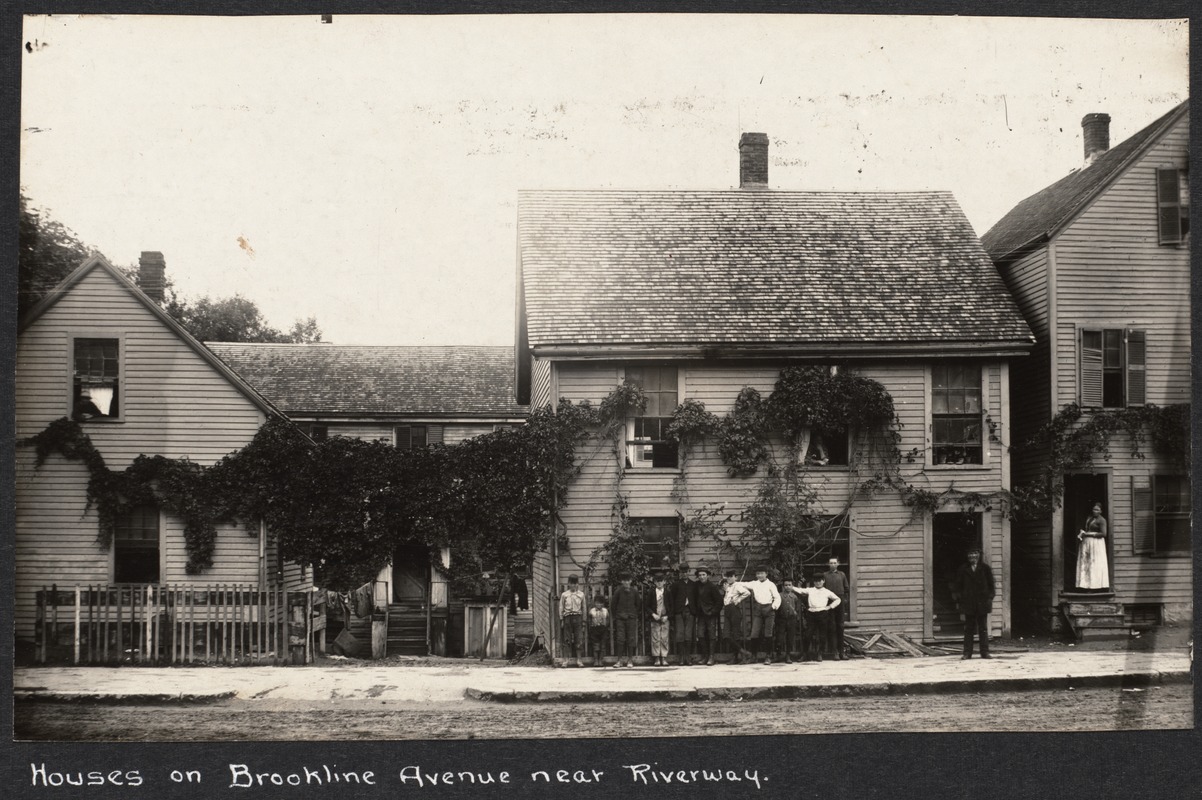 |
81-89 Brookline Ave.
From left to right are numbers 89, 87 (rear), 85, 81. There was a newspaper reference in 1909 to a “nuisance” problem at these addresses and they were torn down circa 1910.
[Source: Digital Commonwealth]
|
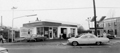 |
Citgo Station, 615 Brookline Ave., January 1966
Looking northwest. Just off screen on the right is the Robert Winthrop School building which still stands. On the right is the Town of Brookline building in the pipe yard on the section of Pearl St. that was eliminated.
From a notebook of property-appraisal photos taken in 1965 and early 1966 for “The Marsh Urban Renewal Project” run by the Brookline Redevelopment Authority. Only a few scattered peripheral structures remain today.
|
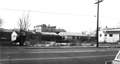 |
Brookline Ave., January 1966
Looking northwest from 646 Brookline Ave. On the right is a partial view of the gas station at 615 Brookline Ave. To its left had been apartment buildings that were razed two years earlier.
From a notebook of property-appraisal photos taken in 1965 and early 1966 for “The Marsh Urban Renewal Project” run by the Brookline Redevelopment Authority. Only a few scattered peripheral structures remain today.
|
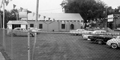 |
636 Brookline Ave., 1965
Looking south on Brookline Ave. to the right. Building still standing in 2025, one of the very few not removed during the urban renewal project of the 1970s.
From a notebook of property-appraisal photos taken in 1965 and early 1966 for “The Marsh Urban Renewal Project” run by the Brookline Redevelopment Authority. Only a few scattered peripheral structures remain today.
|
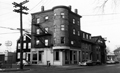 |
Brookline Ave., January 1966
Looking northeast on Brookline Ave. with Emerald St., today’s Pearl St., on the left. From left to right are 657, 651, and 647/645 Brookline Ave.
From a notebook of property-appraisal photos taken in 1965 and early 1966 for “The Marsh Urban Renewal Project” run by the Brookline Redevelopment Authority. Only a few scattered peripheral structures remain today.
|
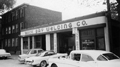 |
666/670 and 676/678 Brookline Ave., January 1966
On the left is the apartment building at 666/670 Brookline Ave. On the right is 676/678 Brookline Ave., a building still standing in 2025, one of the very few not removed during the urban renewal project of the 1970s.
From a notebook of property-appraisal photos taken in 1965 and early 1966 for “The Marsh Urban Renewal Project” run by the Brookline Redevelopment Authority. Only a few scattered peripheral structures remain today.
|
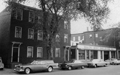 |
666/670 and 676/678 Brookline Ave., January 1966
On the left is the apartment building at 666/670 Brookline Ave. On the right is 676/678 Brookline Ave., a building still standing in 2025, one of the very few not removed during the urban renewal project of the 1970s.
From a notebook of property-appraisal photos taken in 1965 and early 1966 for “The Marsh Urban Renewal Project” run by the Brookline Redevelopment Authority. Only a few scattered peripheral structures remain today.
|

 The Society
 Program Archives