 |
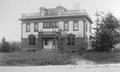
70 Hyslop Rd.
Superficial changes made to trim elements over the years have greatly transformed the appearance of the house.
[Source: Brookline Preservation Department]
|
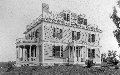 |
195 Fisher Ave.
[Source: Brookline Preservation Department]
|
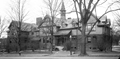 |
Lawrence School
(ID) 030
(Slide ID) P 25-9
[Source: William Robert Murphy Collection]
|
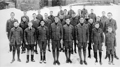 |
Boy Scout Troop 4, United Parish Church, circa 1927
Troop 4 was affiliated with the First Parish Church and was one of a number of Boy Scout troops in Brookline. The troop, shown here at the church, was largely populated at the time by boys from wealthy families. From left to right:
Front row
- Unidentified
- Robert Mason Whittemore
- John Moore Morse
- Robert Churchill Vose
- Richard Goodwin
- Edward Wiggin Robinson
- Delano Wight
- Crocker Wight
Second row
- Robert H. Schacht
- Robert Ware Bridgeman
- Richard Bent
- Richard Wentworth Pentecost
- Seth Morton Vose
- Charles Storrow Denny
- Russell Hastings
- Henry Waite Bigelow
Third row
- Richard Victor Prouty
- Andrew Marshall
- Irving Minot Shepard
- Cranford Rogers
- Edward Fisk Andrews
- Timothy Rhodes
- Herbert Phelps Vose
- Wendell Morse Hastings
- Anthony Donald Hall
Fourth row
- Robert Hey Rawson
- Cortlandt Van Dyke Hubbard
- Richard Bruce Harding
[Source: First Parish Brookline]
|
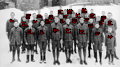 |
Boy Scout Troop 4, United Parish Church, circa 1927 With Annotations
Troop 4 was affiliated with the First Parish Church and was one of a number of Boy Scout troops in Brookline. The troop, shown here at the church, was largely populated at the time by boys from wealthy families.
[Source: First Parish Brookline]
|
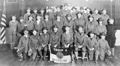 |
Boy Scout Troop 4, United Parish Church, circa 1927
Troop 4 was affiliated with the First Parish Church and was one of a number of Boy Scout troops in Brookline. Troop 4 was largely populated at the time by boys from wealthy families. From left to right:
Front row
- Robert Mason Whittemore
- Delano Wight
- John Moore Morse
- Robert Churchill Vose
- Richard Goodwin
- Edward Wiggin Robinson
- Charles Ogden Little
- Crocker Wight
Second row
- Henry Law Petri
- Robert Ware Bridgeman
- William Bond Wheelwright
- Richard Bent
- Richard Wentworth Pentecost
- Robert Schacht
- Seth Morton Vose
- Charles Storrow Denny
- Russell Hastings
- Unidentified
- Oliver Kennard Scott
Third row
- Richard Victor Prouty
- Irving Minot Shepard
- Andrew Marshall
- Cortlandt Van Dyke Hubbard
- John M. Little
- Cranford Rogers
- Unidentified
- Unidentified
- Herbert Phelps Vose
- Wendell Morse Hastings
- Unidentified
[Source: First Parish Brookline]
|
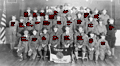 |
Boy Scout Troop 4, United Parish Church, circa 1927, With Annotations
Troop 4 was affiliated with the First Parish Church and was one of a number of Boy Scout troops in Brookline. Troop 4 was largely populated at the time by boys from wealthy families.
[Source: First Parish Brookline]
|
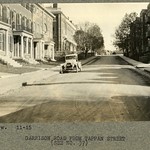 |
Garrison Rd., November 1915
Looking east from Tappan Rd.
[Source: Olmsted]
|
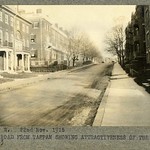 |
Garrison Rd., November 1915
Looking east from Tappan Rd.
[Source: Olmsted]
|
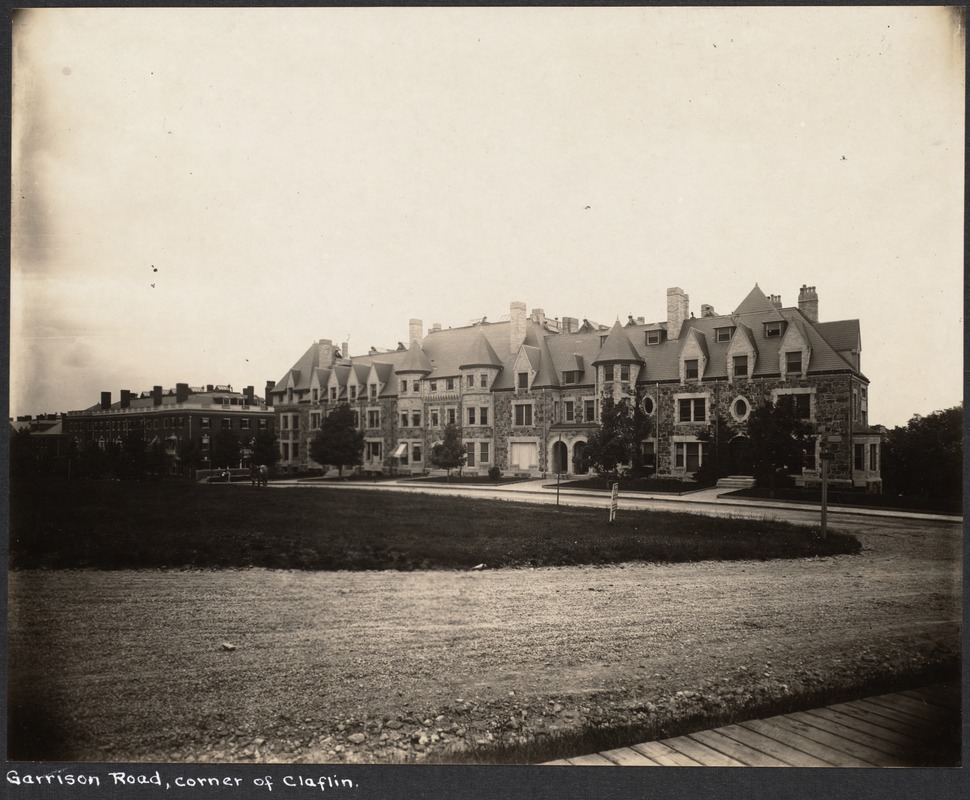 |
Garrison Rd.
Standing on Claflin Rd. looking at the north side of Garrison Rd. The buildings were constructed circa 1891-1892 and all are still standing.
[Source: Digital Commonwealth]
|
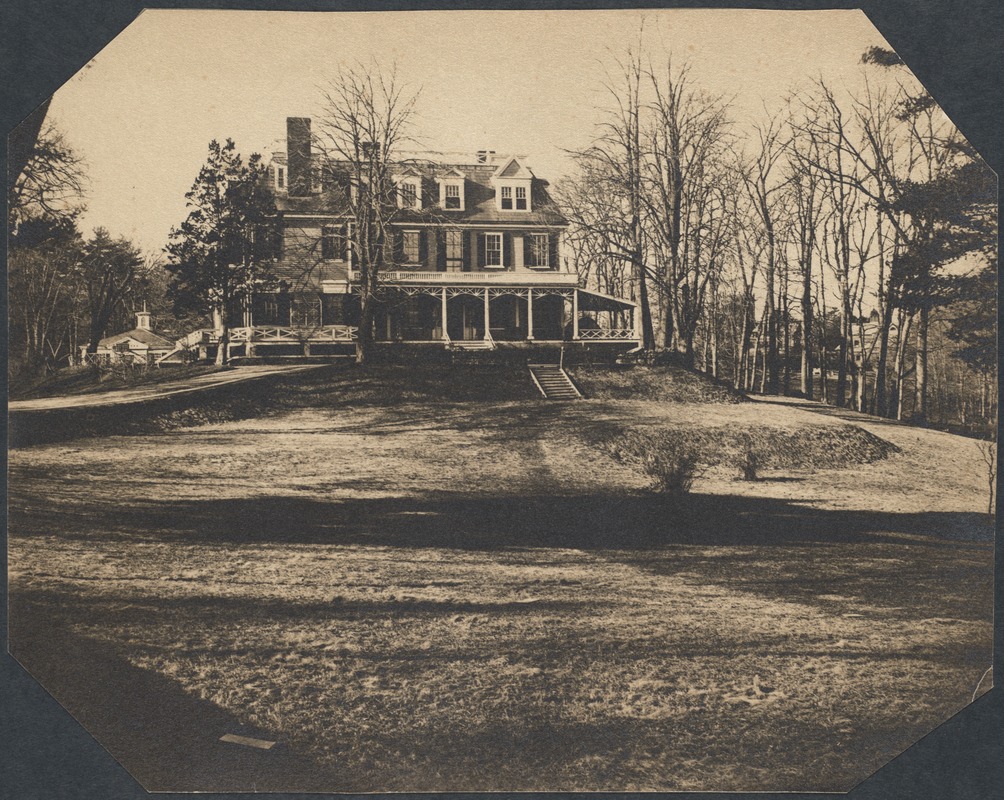 |
25 Goddard Ave.
This house, which was torn down after a fire in 1949, was built by Isaac Cook in 1809. In 1827, Cook built for his younger son the well-known “Cook Cottage” right down the hill from this house. Circa 1878 James Lovell Little and his wife, Mary Revere Little, acquired both this house and the cottage. It is not known why but atlases of the time label the main house as the property of Mary R. Little and the cottage as property of James L. little.
[Source: Digital Commonwealth]
|
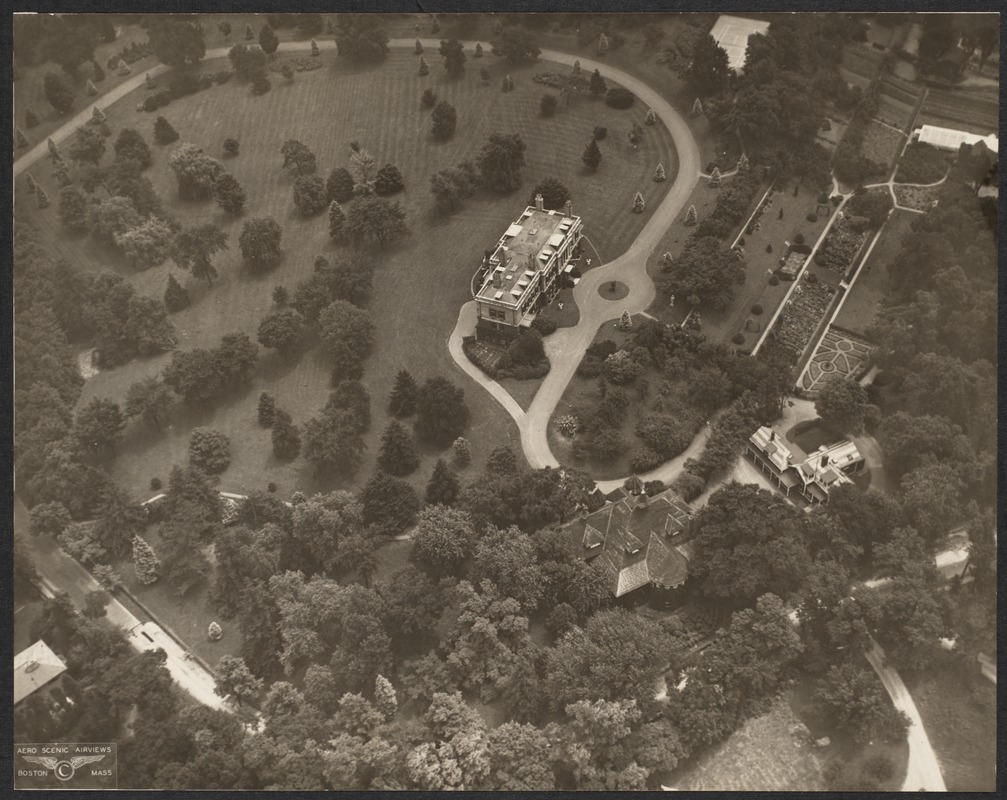 |
Weld House, 50 Goddard Ave.
In the center is the house of Mrs. Hannah (Train) Weld, widow of Dr. Charles Goddard Weld. Goddard Ave. runs along the bottom of the photo with 15 Goddard Ave., still standing, visible in the lower left corner. The Weld house was purchased in 1946 and is still in use by the Hellenic College and Holy Cross Greek Orthodox School of Theology. The other Weld buildings are no longer standing.
[Source: Digital Commonwealth]
|
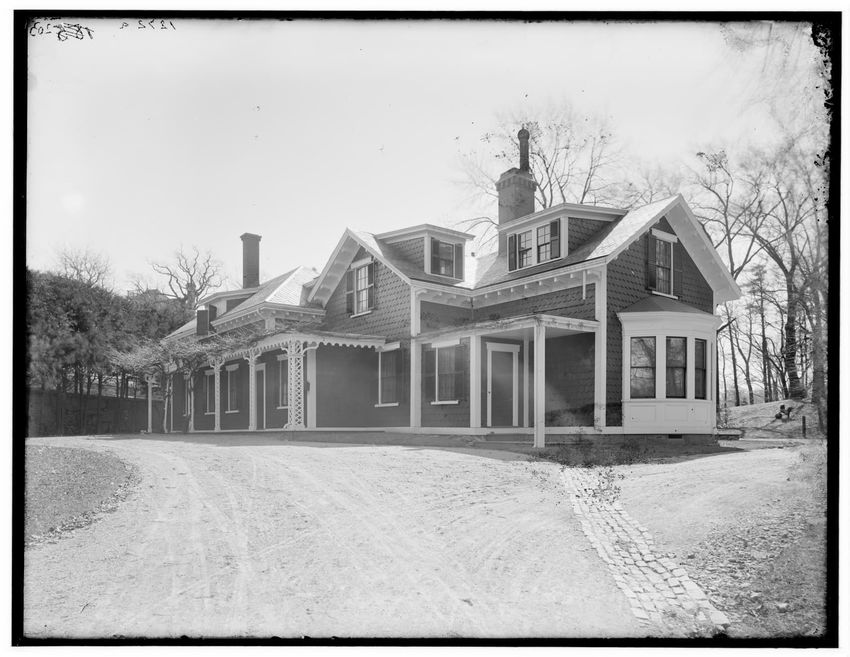 |
Secondary Dwelling, Weld Estate, 50 Goddard Ave.
Viewed from Goddard Ave. The function of this smaller dwelling on the estate of Charles Goddard Weld is not known, it is no longer standing. The stone wall and the driveway it supports are still in use by the Hellenic College and Holy Cross Greek Orthodox School of Theology. The main Weld house of is further up the hill.
[Source: Historic New England]
|
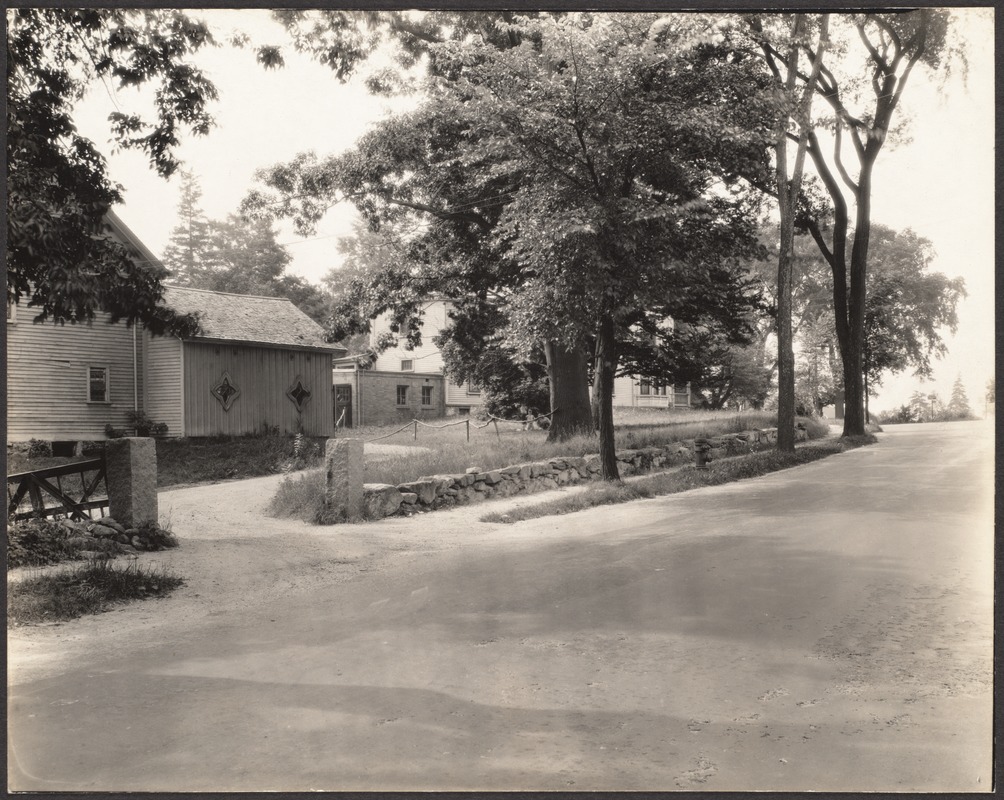 |
Grove St.
This location is speculatively identified as Grove St. just southwest of the intersection with South St. Note the children behind the large tree.
[Source: Digital Commonwealth]
|
 |
University Rd. and Gardner Rd. Junction, 1912
2 Gardner Rd is on the right, still standing. 555 Washington St. is acorss the street, no longer standing.
(ID) 156
(Slide ID) P-27-22
[Source: William Robert Murphy Collection]
|
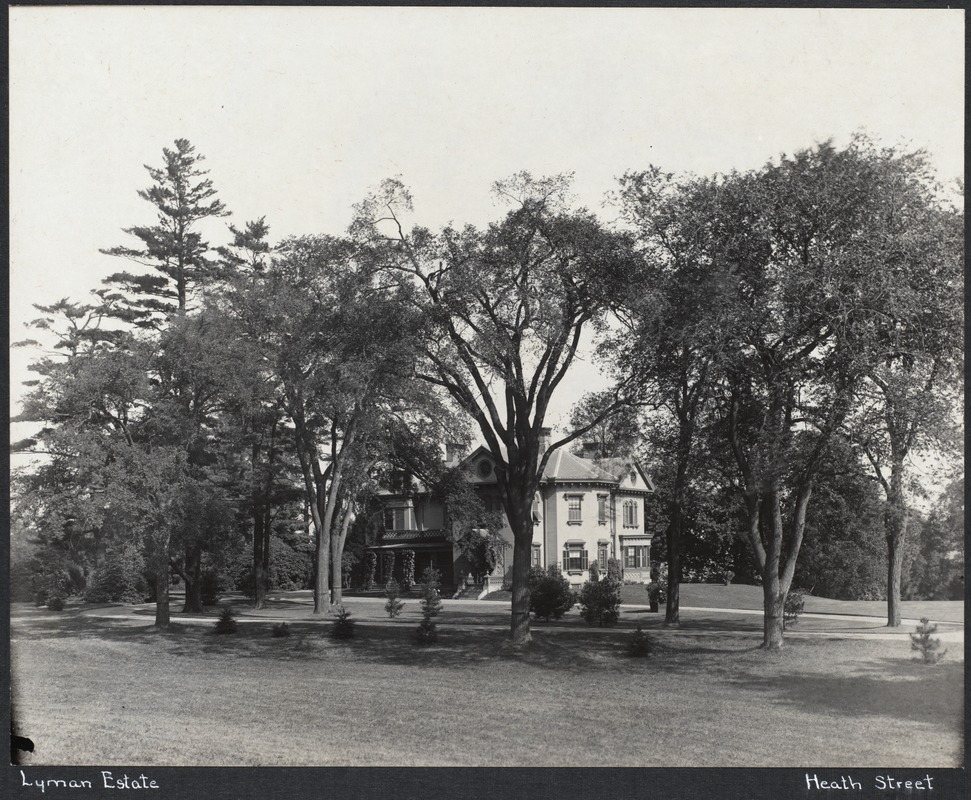 |
Lyman House, 105 Heath St.
The Lyman house was built in 1844 on a 36-acre estate and was maintained for multiple generations. The house was torn down in 1956 and the land is now home to office buildings on the Boylston St. side and a modern housing development.
[Source: Digital Commonwealth]
|
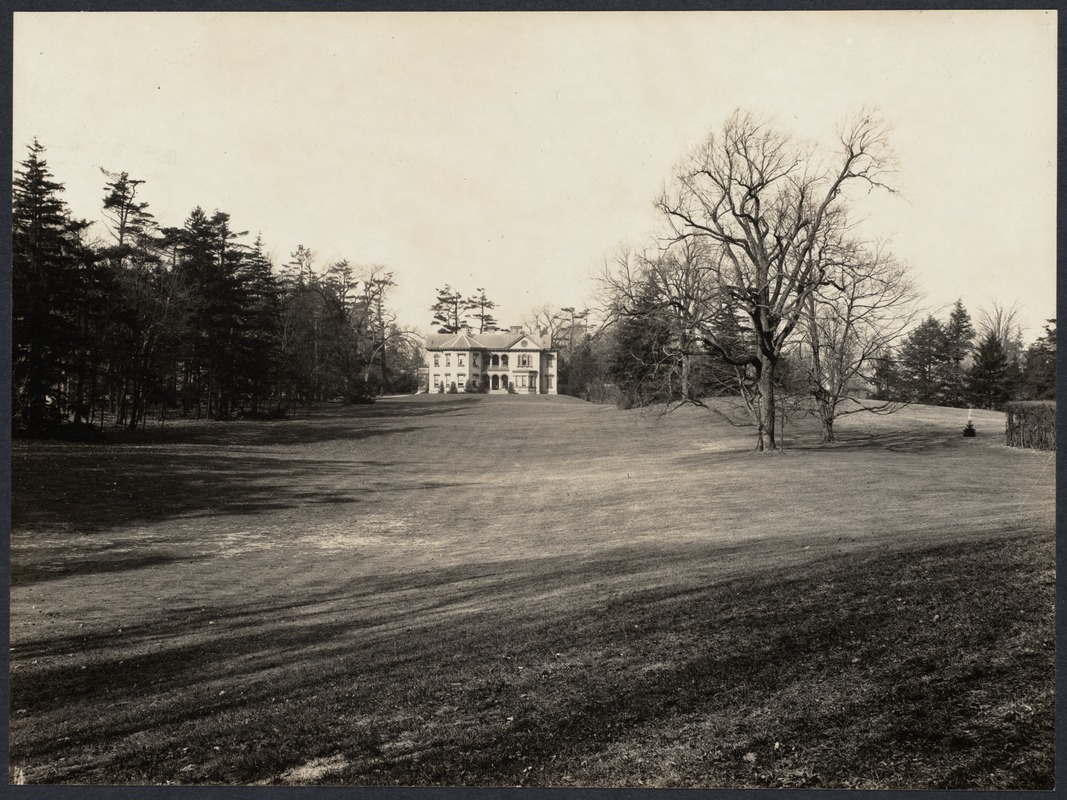 |
Lyman House, 105 Heath St.
The Lyman house was built in 1844 on a 36-acre estate and was maintained for multiple generations. The house was torn down in 1956 and the land is now home to office buildings on the Boylston St. side and a modern housing development.
[Source: Digital Commonwealth]
|
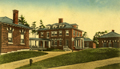 |
Contagious Hospital, 1909
The Town of Brookline maintained its own hospitals until the 1950s. This was the first to be built, in 1894, at the corner of Newton and Grove Streets
|
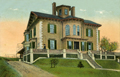 |
Baptist Hospital, 1910
|
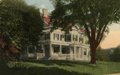 |
The Fisk Hospital, 106 Sewall St.
"For the treatment of Alcoholism and Drug Addiction (By the Towns-Lambert Method)
Private Rooms – Competent Physicians – Trained Nurses
|

 The Society
 Program Archives